TMD & TMJ Management in Lucknow
Jaw pain, clicking, stiffness or trouble opening your mouth? Your jaw symptoms can be assessed and your options explained.
What Is TMD?
Your jaw joints work every time you speak, chew, yawn or swallow. When they, or the muscles around them, become painful, stiff or noisy, even eating can feel like an effort.
TMD stands for temporomandibular disorders: a group of conditions affecting the jaw joints, the chewing muscles, or both. They range from short-lived muscle soreness to longer-lasting joint problems. Symptoms often come and go, and for many people they settle with simple, conservative care.
You may also hear “TMJ disorder” or just “TMJ”. Strictly, the TMJ is the joint, not the problem. You have two temporomandibular joints, one on each side of the face, just in front of the ears, where the lower jaw meets the skull. Each contains a small cushioning disc, and the joints work together with the chewing muscles and ligaments. Because the two joints move as a pair, a problem on one side can change how the whole jaw feels.
This page is general information and cannot tell you whether you have TMD; only an examination can.
Common Symptoms of TMD
TMD can show up in different ways, and nobody has all of them. These symptoms may be associated with TMD, but they can have other causes too, which is why an examination matters.
Jaw pain
An ache or tenderness in the jaw, in front of the ear, or in the cheek or temple, often worse when chewing, speaking or yawning. Some people also notice facial discomfort or neck and shoulder tension.
Clicking or popping
A click, pop or grating feeling when the mouth opens or closes. This is common and often painless.
Jaw stiffness
A tight or tired jaw, often after waking, after a long meal, or after a spell of clenching.
Difficulty opening the mouth
Not opening as wide as usual, or the jaw catching or drifting to one side. Limited opening that starts suddenly, or follows an injury, should be checked promptly.
Jaw locking
The jaw may catch or lock briefly, and sometimes will not fully open or close. A jaw that will not open or close needs prompt attention.
Pain while chewing
Discomfort when biting or chewing may be associated with the joint or muscles. A toothache, gum problem or cracked tooth can feel similar, so an examination is needed to tell them apart.
Headaches, earache without an ear infection, and a change in how the teeth seem to meet may also occur with TMD, but each has many other possible causes.
What Can Contribute to TMD?
For many people no single cause is found. TMD is generally seen as multifactorial, meaning several things may combine. Factors that may contribute include:
- Clenching or grinding of the teeth (bruxism), often unnoticed
- Injury to the jaw or face
- Arthritis or other joint conditions
- Muscle tension in the jaw and face, which can be linked to stress
- Habits such as nail-biting, prolonged gum chewing, or chewing pens or ice

The role of the bite is debated, and it is not clear that it is a main cause for most people. A dentist will still look at how your teeth meet as part of an assessment.
Is Jaw Clicking Always a Problem?
No. Many people have a jaw that clicks or pops, and for most of them it causes no pain and no trouble. Clicking on its own, with no pain and normal jaw movement, does not automatically mean treatment is needed. It may be worth an assessment if clicking:
- Comes with pain in the joint or chewing muscles
- Comes with catching, locking or limited opening
- Began after an injury
- Is changing or getting worse
- Is getting in the way of eating, speaking or sleeping
Only an examination can say what a click means in your case. If it turns out to be nothing to worry about, that is useful to know.
How Is TMD Assessed?
There is no single test that confirms TMD. Assessment relies mainly on talking with you and examining you.
Symptoms and history
When it started, what helps or worsens it, any injury, habits such as clenching, and past dental work.
Jaw movement
How far and how smoothly the jaw opens, and whether there are sounds.
Joint and muscle examination
Gently checking for tenderness.
Dental and bite examination
Where relevant: wear, cracks, missing teeth, and how the teeth meet.
Imaging, only when indicated
Scans are not needed for everyone.
Contributing factors
Habits, past injury and other conditions that could explain the pain.
A discussion of options
What was found, what the choices are, and what to expect.
TMD Treatment and Management
There is no single treatment for TMD. General guidance favours starting with conservative, reversible approaches; treatments that permanently change the teeth or bite are generally not a first step. Approaches that may be considered include:
- Self-care and habit changes: softer foods for a while, avoiding chewing gum and hard foods, and noticing daytime clenching.
- Jaw exercises or physiotherapy to help movement and comfort.
- Oral appliances, such as night guards or splints, sometimes used where clenching or grinding is part of the picture. They are not right for everyone.
- Medication for short-term pain or muscle symptoms, only on a doctor’s or dentist’s advice.
- Specialist-led care, such as joint injections or surgery, reserved for selected people who have not improved with conservative care. It is rarely needed.

Some of these are provided by other professionals rather than by a general dental clinic. If your situation needs care beyond dentistry, it is worth knowing early.
TMD, Teeth Grinding and Jaw Clenching
Many people clench or grind their teeth, often during sleep or while concentrating, without knowing. This puts extra load on the teeth and jaw muscles and may be associated with jaw aching, morning stiffness, headaches, and worn or chipped teeth.
Not everyone who clenches or grinds has TMD, and not everyone with TMD clenches or grinds. Stress can raise muscle tension and clenching in some people, but stress alone has not been shown to cause TMD. If you notice flattened or chipped teeth, wake with a tired jaw, or a partner hears grinding, a dentist can examine your teeth and talk through your options.
When Jaw Pain Needs Other Care
Not all jaw pain is TMD, and not all TMD is managed in one place. A further assessment may be sensible if:
Other joints or nerves are involved
Other swollen or stiff joints, or facial pain that is sharp, burning or comes with numbness, can point to a wider joint, ear, sinus or nerve condition.
In these situations the dentist may suggest seeing a physician, an ear-nose-throat specialist, a physiotherapist, or an oral medicine or maxillofacial specialist.
When to Seek Prompt Attention
Go to a hospital emergency department or call emergency services if:
- Jaw pain comes with chest pain or pressure, shortness of breath, sweating, nausea, or pain spreading to the arm or shoulder — jaw pain can sometimes be a sign of a heart problem
- You have difficulty breathing or swallowing
- There is significant swelling of the face, jaw or neck, especially with fever
- Bleeding does not stop
- You have had a blow, fall or accident to the face or jaw and suspect a fracture
Get your jaw checked as soon as possible if it is stuck open or closed and will not move, if your ability to open the mouth has suddenly become severely limited, if the pain is severe or rapidly getting worse, or if you have numbness or tingling in the lip, chin or face after an injury. Do not try to force a locked jaw. If you cannot reach a dentist quickly, go to an emergency department.
How Long It Takes, and How It Feels
How long does it take?
There is no standard timeline. Some people find symptoms settle with simple measures over time; others need longer care, and some find symptoms return from time to time. Management is usually reviewed over time rather than completed in one visit, so the plan can change as you respond.
Does treatment hurt?
TMD itself can be uncomfortable, and the joint or muscles may feel tender when examined. Experience varies from person to person, and recovery depends on the underlying problem and the approach used. No one can promise a particular result or timescale. If anything hurts during your examination, tell the dentist so it can be adjusted.
TMD Treatment Cost in Lucknow
The cost of jaw care cannot be quoted responsibly without an assessment, because two people with similar symptoms may need quite different things. What affects the cost:
- How complex the assessment is
- Diagnostic records, where clinically needed
- The type of management
- The number of visits and reviews
- Any additional dental treatment that turns out to be needed
- Referral or specialist care outside the clinic, if your case needs it
Before starting, ask: what do you think is contributing to my symptoms? What are my options, and why this one? Is it reversible, and what are its limits and risks? How many visits and reviews should I expect? What will the total cost be, including reviews? What happens if it does not help?
TMD Management at ESD Dental Clinic
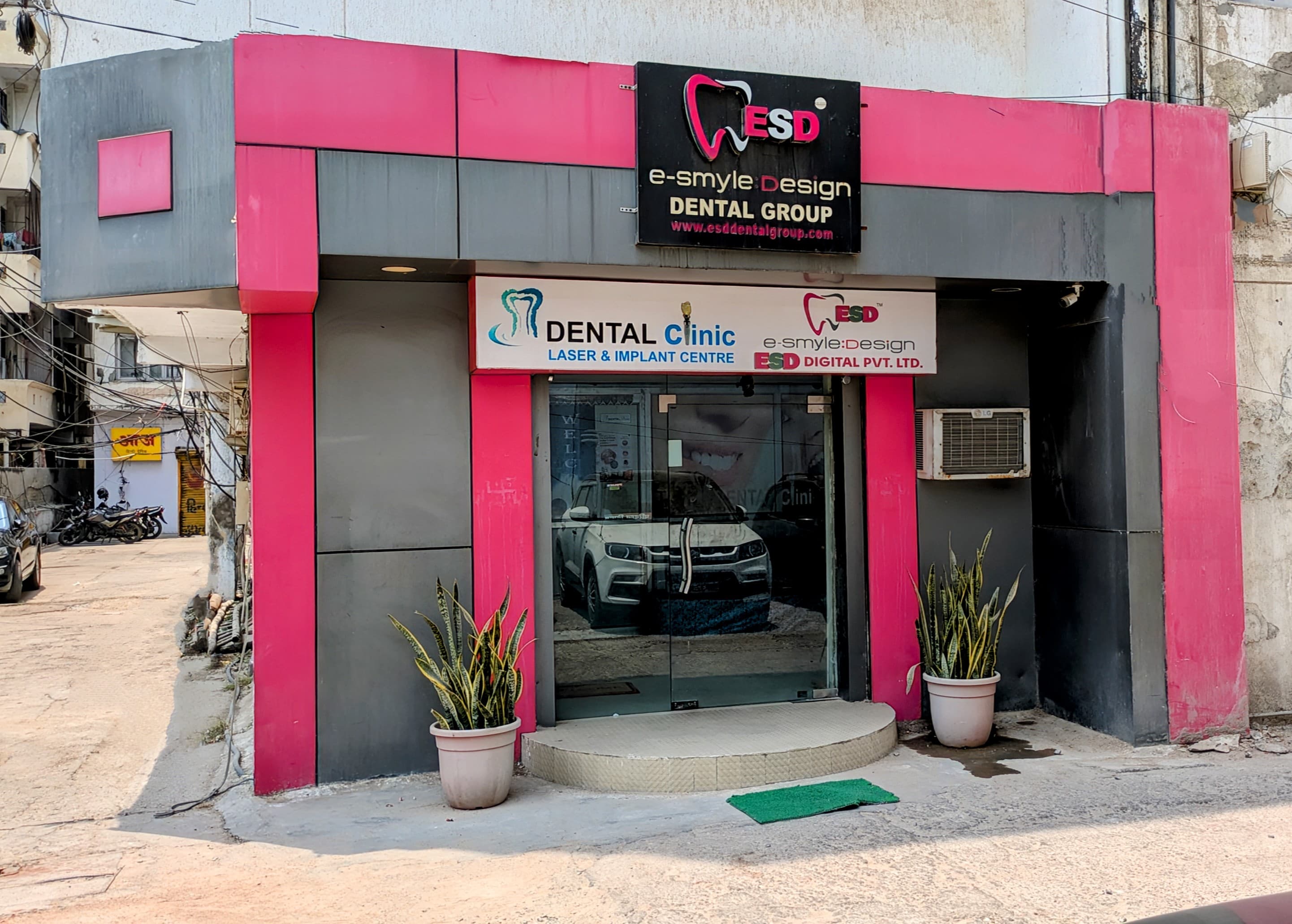
ESD Dental Clinic is a multi-specialty dental clinic in Hazratganj, Lucknow, established in 2011. TMD management is one of the treatments offered at the clinic.
Jaw concerns at ESD start with a consultation and an examination, so that what may be behind your symptoms can be understood before options are discussed. At your consultation the dentist can explain which approaches are suitable in your case, what can be provided at the clinic, and whether anything would need to be arranged elsewhere. Management is reviewed over time.
ESD Dental Clinic provides multidisciplinary dental care through its team of dental professionals, with qualifications in areas that include implantology, prosthodontics, orthodontics and cosmetic dentistry. When you book, you are welcome to ask which dentist will assess your jaw.
TMD & TMJ FAQs
TMD stands for temporomandibular disorders, a group of conditions affecting the jaw joints, the chewing muscles, or both. The TMJ, or temporomandibular joint, is the joint itself: one on each side of the face, just in front of the ear, where the lower jaw meets the skull. Only an examination can tell whether TMD is behind your symptoms.
Book a TMD Consultation
If jaw pain, clicking, stiffness or locking is affecting your day, an assessment is a sensible next step. It helps to note when your symptoms started, any injury or previous dental work, the medicines you take, and any earlier X-rays or scans.
ESD Dental Clinic, Ground Floor, B Block, Surajdeep Complex, 1-Jopling Road, near Aaj Press, Hazratganj, Lucknow – 226001. Phone +91 72669 23333.
This page is general information. It is not a diagnosis and does not replace an examination by a dentist or doctor.
Request an Appointment
Tell us what you need and our care team will call you back to confirm a time. We never share your details.
- An examination first — we look before we recommend anything.
- A written, itemised plan with the cost, before you decide.
- Treatment in planned stages, with a review afterwards.
Other Treatments
Ready to book your visit?
An examination, a written treatment plan and the prices that go with it — before you decide anything.