Bleeding Gums Are Not Normal — Here Is What They Are Telling You
Almost everyone who says "my gums always bleed a little" has treated it as normal for years. It is the earliest, cheapest, most reversible warning dentistry gives you.
Read moreCare for your gums, protect the foundation of your smile.
Gum problems can affect the tissues that support your teeth. Bleeding or swollen gums are worth having checked rather than ignored. At ESD Dental Clinic in Hazratganj, care starts with an examination, and the treatment we recommend depends on what we find.
Your gums surround and support your teeth. When plaque, a soft film of bacteria, builds up along the gumline, it can irritate the gums and make them inflamed. If this continues, the inflammation can spread to the deeper tissues that hold the teeth in place, which is called periodontal disease.
In its early stages, gum disease can be painless, which is one reason it is sometimes missed. Left untreated, it can progress and, in advanced cases, affect how firmly teeth are held. Many people can manage gum problems well when they are found and treated, so an early check-up is worthwhile.
Gum problems can show up as:
These symptoms can have different causes. Swelling or a small pimple on the gum near a tooth, for example, can be related to the gums or to an infection inside the tooth. A dental examination is needed to determine what is happening.
Several factors can contribute to gum problems. They include:
Having one of these factors does not mean you will develop gum disease, and gum disease can occur without an obvious cause.
| Gingivitis | Periodontitis |
|---|---|
| Inflammation of the gums | Gum disease that has reached the deeper supporting tissues |
| Gums may bleed or look swollen | Can involve loss of the support around the teeth, and sometimes loose teeth |
| Often associated with plaque build-up | Can involve deeper pockets around the teeth and bone changes |
| Needs assessment and treatment | Needs a thorough periodontal assessment and a treatment plan |
Not every case of gingivitis becomes periodontitis, and how far gum disease has progressed can only be judged by examining your mouth.
Gum treatment may be considered for people who have:
Only a clinical examination can say whether you need gum treatment and what kind.
Assessment starts with a conversation about your symptoms, your dental history and your general health. Your dentist then examines your teeth and gums. Depending on your situation, it may include:
You will be told what was found and what it means before any treatment is planned.
The right treatment depends on the extent and severity of the gum problem, the areas involved and your general health. You will not necessarily need all of these.
A professional clean removes plaque and hardened deposits from the teeth and along the gumline. When gum inflammation is linked to plaque build-up, this can help settle it. A routine clean and periodontal treatment are not always the same thing.
When gum disease has affected the areas below the gumline, cleaning may need to go further — often called scaling and root planing. Deposits are removed from the tooth surfaces and roots beneath the gums, and the root surfaces smoothed so the gums can heal against them. It may take more than one visit.
This may need care beyond cleaning: more detailed periodontal treatment, a closer review schedule, and, in selected cases, gum surgery. Your dentist will explain which options apply and whether they can be provided at the clinic.
When gum problems are widespread rather than limited to a few areas, treatment is planned across the whole mouth rather than one tooth at a time. Your dentist decides the order and number of visits, and how progress is reviewed.
Gum disease usually needs continuing care after the initial treatment. Regular check-ups, professional cleaning where recommended, and good daily cleaning at home all help keep the gums healthy.
You describe your concerns, and your dentist asks about your dental and general health history.
Your teeth, gums and bite are examined.
The gums are checked for inflammation, plaque and tartar, and for any looseness or spaces around the teeth.
X-rays or other images may be taken where they are needed.
Your dentist explains what was found, in plain language.
The options are set out, including what they involve, and you can ask about the cost and timing before you decide.
Treatment is carried out as planned, in stages where needed.
You return for review, and your dentist advises how to keep your gums healthy.
There is no standard timeline. It depends on how severe the gum problem is, how many areas of the mouth are affected, the type of treatment needed, how your gums respond, whether treatment is carried out in stages, and the follow-up and maintenance needed. Your dentist can give you a clearer idea after your examination.
It depends on the condition and the treatment. Some treatments can leave the gums tender or the teeth temporarily sensitive, and inflamed gums can be more sensitive than healthy ones. Local anaesthesia may be used where clinically appropriate. Contact the clinic if pain is severe, does not settle, or is not what you were told to expect.
The cost of gum treatment varies from person to person, so we do not publish a fixed price. It can depend on:
An examination is needed before a reliable estimate can be given. Once your dentist has assessed your gums, you can ask about the cost of the recommended treatment before you decide.
Two quotes can cover different things, so it is worth asking any clinic:
After gum treatment, the most useful things you can do are:
Every case is different, so follow your own dentist’s advice rather than a general routine.
It can. Gum problems can return or become active again, particularly if plaque is not controlled or if follow-up is missed. That is why maintenance is an important part of gum care. How often you are reviewed depends on your own risk and the treatment you have had, and in some cases long-term maintenance is recommended. Gum disease is better thought of as a condition to be managed than one that is cured once and for all.
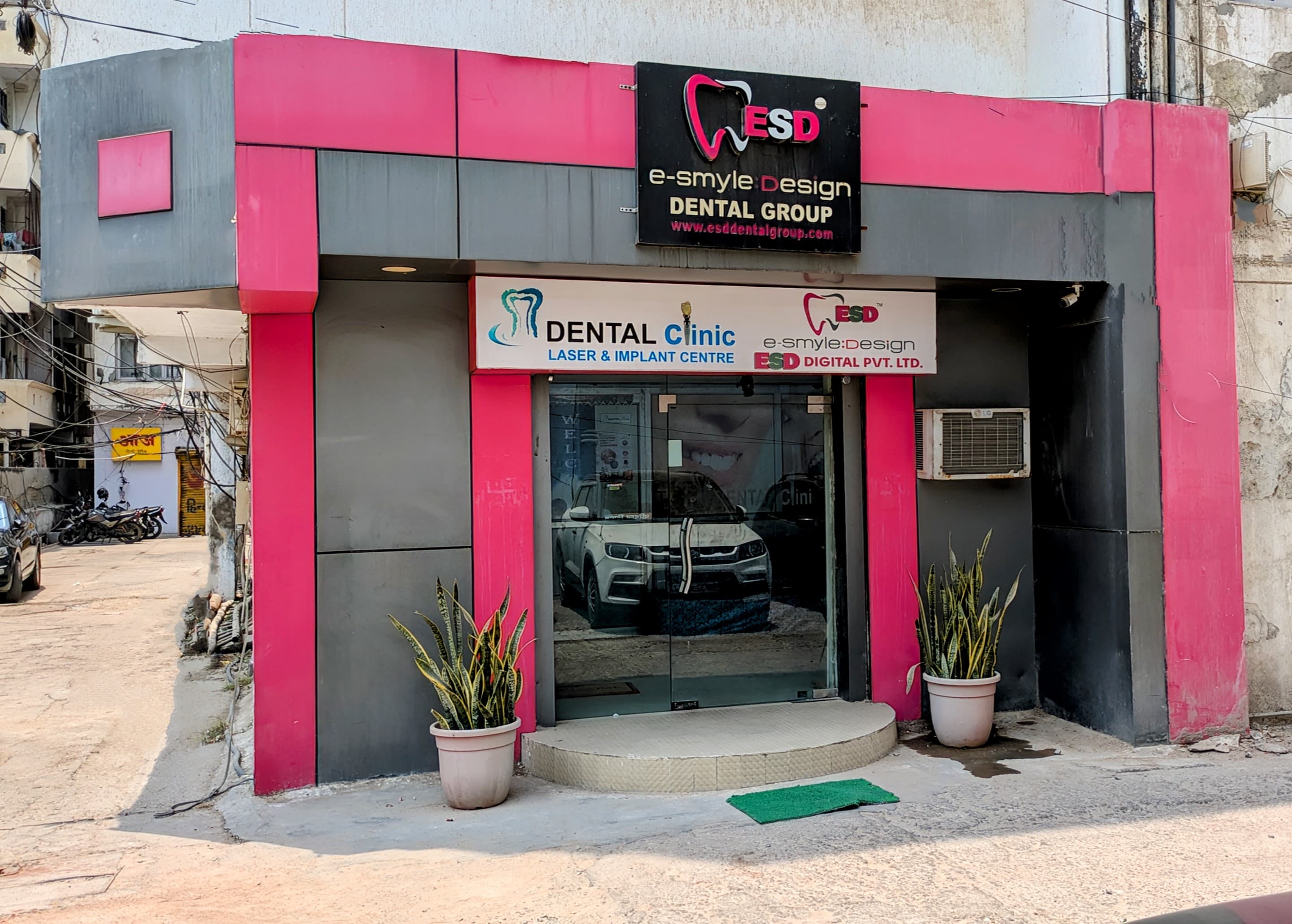
ESD Dental Clinic has been serving patients on Jopling Road in Hazratganj since 2011. It is a multi-specialty dental clinic with a team of dentists. If you are worried about your gums, the first step is an assessment: we look at what is happening, explain it to you, and talk through the options before any treatment is decided. Gum concerns are assessed and treated by the appropriate member of the ESD dental team.
Inflammation or infection of the gums and, in more advanced cases, of the tissues that support the teeth. It usually starts with plaque along the gumline.
If your gums bleed, feel sore or look different, an examination is the way to understand why. We will look at your gums and teeth, explain what we find and talk through your options, so you can decide in your own time.
ESD Dental Clinic, Ground Floor, B Block, Surajdeep Complex, 1-Jopling Road, near Aaj Press, Hazratganj, Lucknow – 226001. Phone +91 72669 23333.

Tell us what you need and our care team will call you back to confirm a time. We never share your details.
An examination, a written treatment plan and the prices that go with it — before you decide anything.