 Blog
Treatments8 Oct 2026 15 min
Cavity in Milk Teeth: Causes, Symptoms & Treatment
Learn what causes cavities in milk teeth, the signs parents should watch for, treatment options, and ways to help prevent tooth decay in children.
Read moreA cavity is treated by removing the decay and restoring the tooth, most often with a filling.
Think you might have a cavity? At ESD Dental Clinic in Hazratganj, Lucknow, an examination can confirm what is happening and what treatment is appropriate.
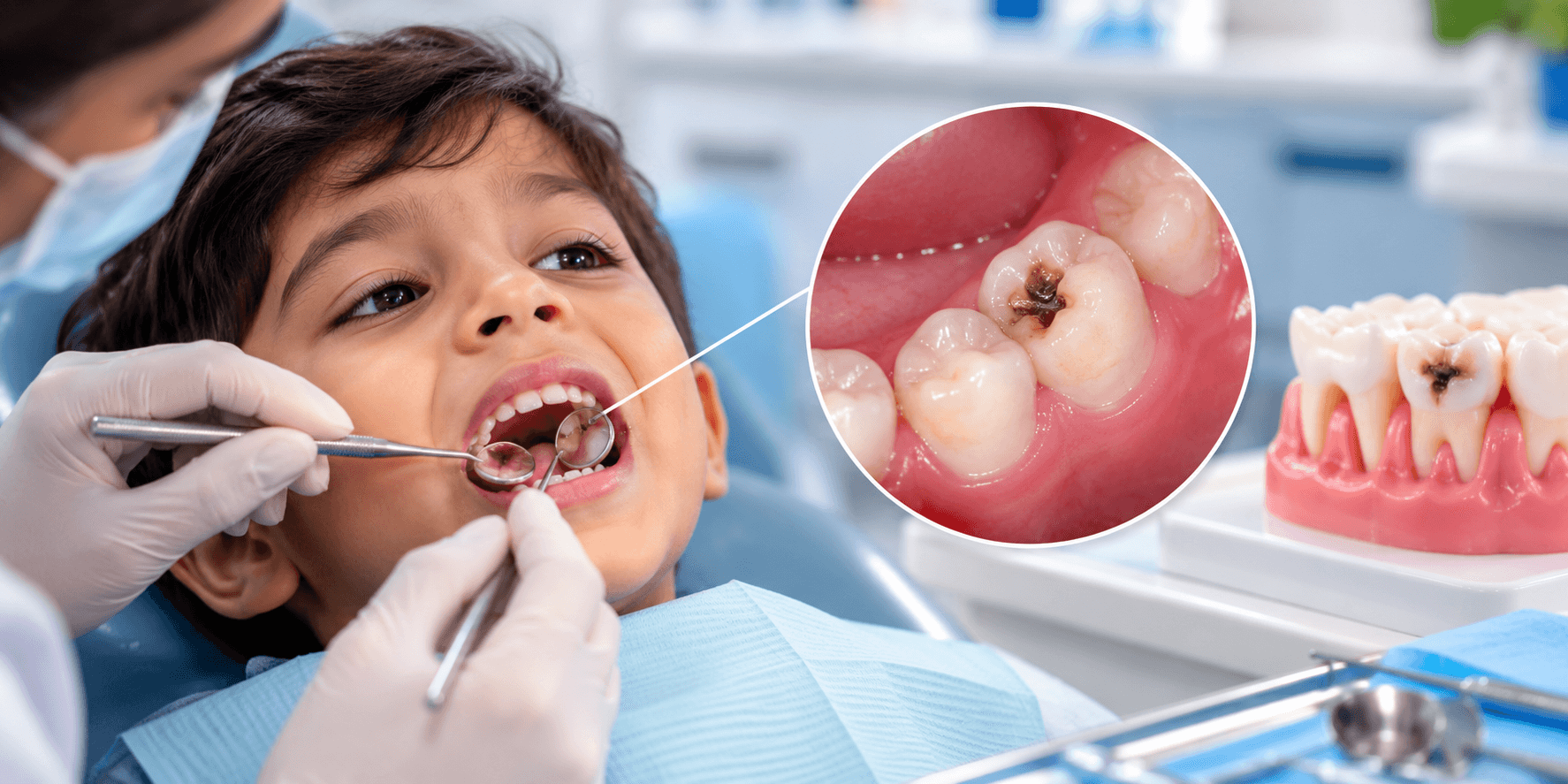
A cavity is a small area of tooth structure damaged by decay. Decay develops gradually, most often where plaque and food residue are allowed to build up on a tooth surface over time. Left untreated, decay tends to get larger, which is one reason early treatment usually keeps things simpler than waiting.
Cavity restoration means treating the decayed area and restoring the tooth’s shape and function. The decayed part of the tooth is removed first, so the problem does not continue to spread, and the tooth is then rebuilt with a restoration. At ESD, this is done with a tooth-coloured composite filling, shaded to blend with the surrounding tooth so the repair is not obvious.
A cavity can show up as:

A cavity can exist without any pain, particularly in its early stages. This is one reason regular dental check-ups matter, even without symptoms — by the time a cavity causes noticeable discomfort, it may already have grown larger.
A filling may be considered when a cavity is found and enough healthy tooth structure remains to support it. Not every cavity needs the same treatment, and whether a filling is appropriate for a particular tooth depends on an examination.
A dentist assesses a cavity by examining the tooth, checking for changes in colour or texture, and testing sensitive areas. Imaging may be used where it is clinically appropriate to see beyond what is visible. An examination is the only way to confirm whether a cavity is present.
A general outline. The exact steps depend on the tooth and the extent of decay, and your dentist will explain what applies to your case.
The tooth and the extent of decay are assessed, and your dentist explains what is proposed before starting.
Numbing the area can help keep the tooth comfortable during preparation, depending on the tooth and the extent of decay.
The decayed part of the tooth is removed and the area is cleaned, so that only healthy tooth structure remains.
The restoration material is placed into the cleaned cavity in layers, where needed.
The filling is shaped and polished to match the surrounding tooth.
Your bite is checked so the filling feels comfortable and does not sit too high.
Some patients notice temporary sensitivity after a filling. If sensitivity persists, worsens, or your bite feels uneven, contact your dentist.
There is no single, fixed cost, because it depends on the tooth involved — the extent of the decay, the number of teeth, the restoration required, and whether any additional treatment or diagnostic steps are needed. A small, early cavity generally needs less than a larger or more complex one. Before agreeing to treatment, it is worth asking:

Good daily brushing and interdental cleaning, being mindful of frequent sugary food and drink, and regular dental check-ups all help reduce the risk of future cavities.
Regular check-ups matter even if nothing hurts, since early decay is often easier and simpler to treat than decay that has been left to grow. Your dentist can advise on what matters most for your case.
Cavity restoration is one of the treatments offered by ESD Dental Clinic, a multi-specialty dental clinic in Hazratganj, Lucknow, established in 2011. An examination is needed to confirm whether you have a cavity and what treatment is appropriate.
A dental cavity is a small area of tooth structure that has been damaged by decay. Left untreated, it tends to get larger.
If you think you have a cavity, or want to check, an examination is a sensible next step.
ESD Dental Clinic, Ground Floor, B Block, Surajdeep Complex, 1-Jopling Road, near Aaj Press, Hazratganj, Lucknow – 226001. Phone +91 72669 23333.
This page gives general information. It is not a diagnosis and does not replace an examination by a dentist.
Tell us what you need and our care team will call you back to confirm a time. We never share your details.
An examination, a written treatment plan and the prices that go with it — before you decide anything.