Article
Treatments5 Nov 2026 1 min
Clear Aligners vs Traditional Braces: An Honest Comparison
Aligners are not automatically better than braces. The right choice depends on your case, your discipline and your timeline.
Read moreBraces planned around your teeth, your bite and your treatment goals.
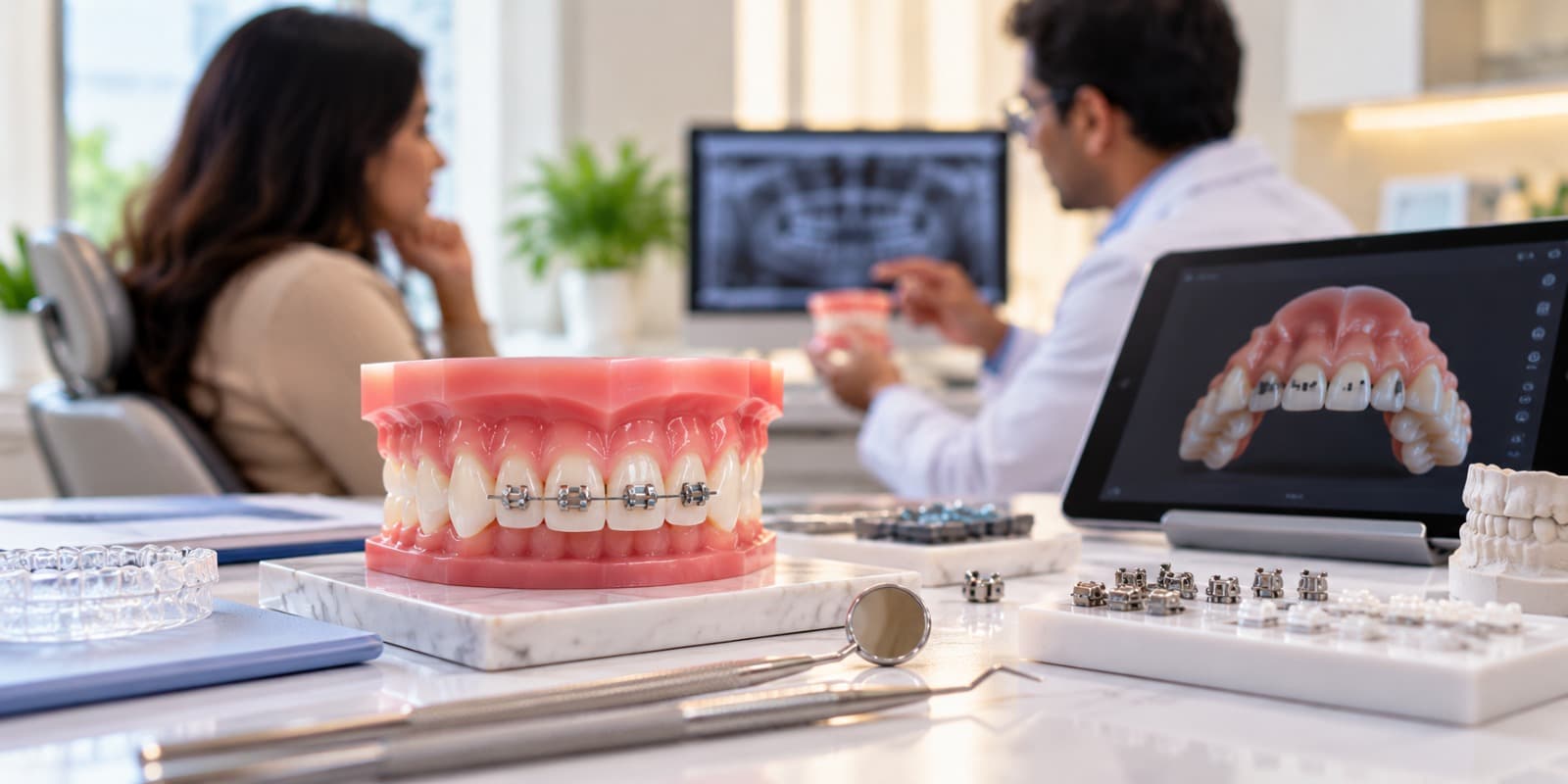
Braces are a common way to correct crowded, gapped or misaligned teeth and certain bite problems. At ESD Dental Clinic in Hazratganj, treatment starts with an examination, so you know what your teeth need and what your options are before you decide anything.
Dental braces are a fixed orthodontic appliance. Small attachments called brackets are bonded to the teeth and connected by a wire, which applies gentle, controlled pressure to move the teeth gradually into a better position over time.
People sometimes search for braces using terms such as “teeth clip” or “dental clips”; the professional term is orthodontic braces. Braces are one form of orthodontic treatment. They may help correct certain alignment and bite problems, and what they can achieve depends on the individual case.
An orthodontic assessment may suggest braces for people with:

Not everyone with uneven teeth needs braces, and braces are not the only option. Your dentist will examine your teeth and bite, explain what is causing the problem, and tell you whether braces, another form of orthodontic treatment, or no treatment at all makes sense for you.
Teeth are held in the jaw by bone and a ligament around each root. When steady, light pressure is applied to a tooth over time, the bone around it gradually remodels, allowing the tooth to move.
The wire in braces provides that pressure, and it is changed or adjusted at regular visits so the teeth keep moving in the planned direction. Because the movement is gradual, treatment happens over months rather than days, and the teeth need to be held in their new position once the braces come off.
Which is suitable depends on your teeth, your bite, your goals and your dentist’s assessment, and the cost can differ between them.
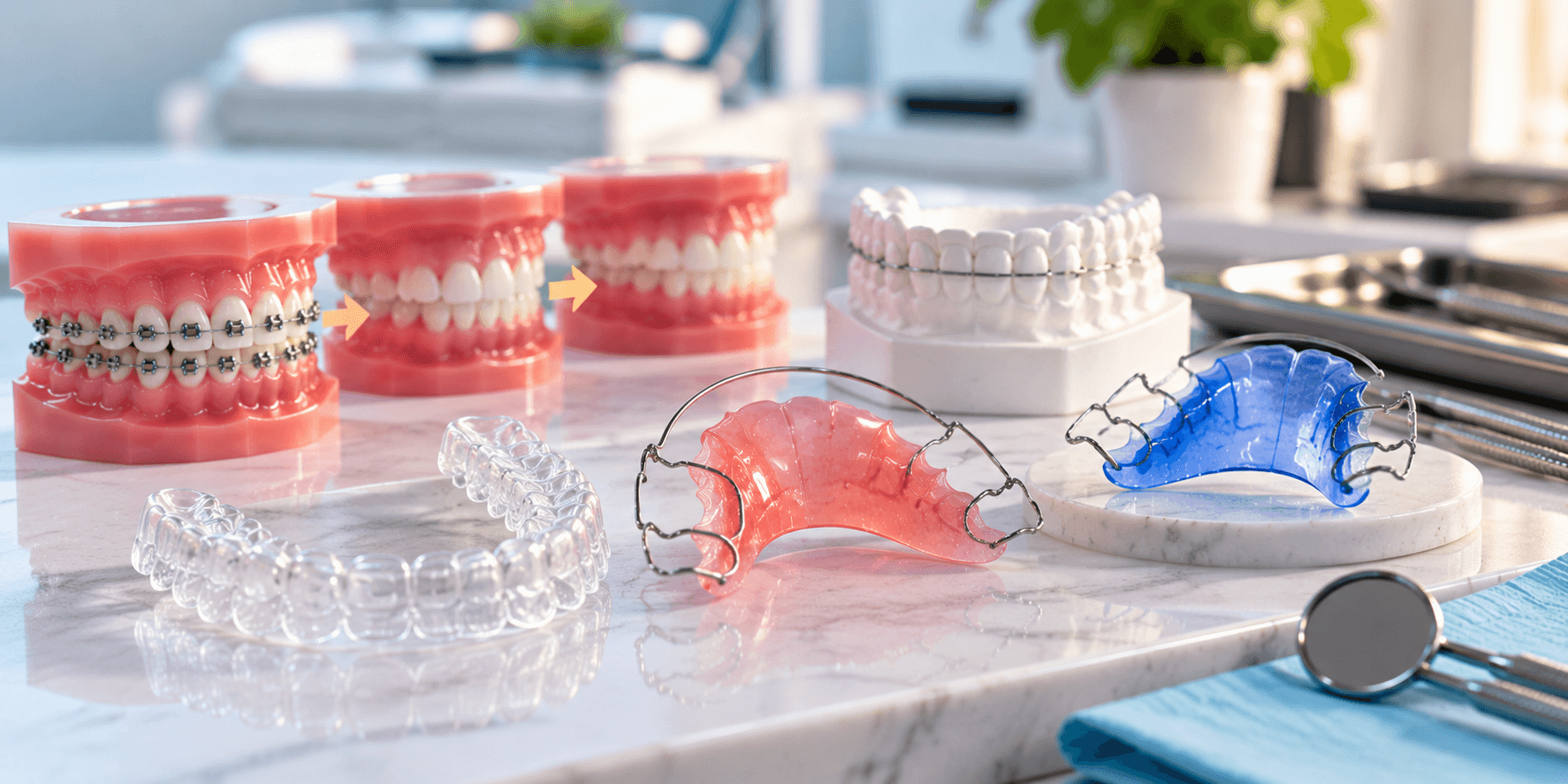
Metal braces use stainless-steel brackets and a wire. They are the most widely recognised type and are clearly visible on the teeth. Coloured elastic bands are sometimes used to hold the wire, depending on the system.
Ceramic braces work in the same way as metal braces, but the brackets are tooth-coloured or clear, so they are less noticeable. They are still fixed to the teeth and cannot be removed for eating or cleaning.
Your dentist asks about your concerns and dental history and examines your teeth, gums and bite. Any dental problems, such as decay or gum disease, are usually addressed before braces are fitted.
A closer look at how your teeth and jaws fit together, including where teeth are crowded or spaced and how the upper and lower teeth meet.
Where clinically required, records such as X-rays or photographs may be taken to plan treatment. You then see the proposed plan, what it involves and what it costs, before you decide.
The brackets are bonded to the teeth and the wire is fitted. You are shown how to look after the braces and what to do if something breaks or comes loose.
You return at regular intervals so the wire can be adjusted and progress checked. Your dentist will tell you how often, as this varies from person to person.
When the teeth and bite have reached the planned position, the braces are removed and the teeth are cleaned.
A retainer is fitted to help hold the teeth in their new position. Retention is an important part of orthodontic treatment, not an optional extra.
There is no standard length of treatment. How long braces take depends on:
Only an orthodontic assessment can estimate how long your own treatment is likely to take, and your dentist can tell you if that changes.

Fitting braces is not usually painful, but many people feel pressure or tightness in the teeth, and some soreness for a few days after the braces are fitted. You may notice similar tenderness after some adjustment visits, which usually settles.
Braces can also rub the inside of the cheeks and lips at first until the mouth adjusts. Experiences vary from person to person.
If pain is severe, or does not settle, or a wire or bracket is causing injury, contact the clinic so it can be looked at.
Most people continue to eat normally, with a few adjustments: be careful with very hard foods that can break brackets or bend wires, sticky or chewy foods that pull on the braces, and biting straight into hard foods rather than cutting them into smaller pieces. Damage to braces can delay treatment.
Brackets and wires create extra places where plaque and food collect. Brush carefully around the brackets and along the gumline, clean between your teeth and under the wire as you are shown, attend your regular visits, and tell the clinic promptly if a bracket comes off or a wire moves out of place.
Search for braces cost or braces price in India and you will see very different figures, because the cost depends on the type of braces and on your case. Metal braces and ceramic braces are usually priced differently, and no figure quoted without examining your teeth can be relied on. The main factors are:
We do not publish a fixed price, because it cannot be given fairly without an assessment. After examining your teeth, we explain what is needed and give you a written estimate.
Worth asking at any clinic, including ours:
Braces and clear aligners are both used to move teeth, and they work differently.
| Braces | Clear aligners | |
|---|---|---|
| Appliance | Brackets and wire fixed to the teeth | A series of removable clear trays |
| Visibility | Visible; ceramic braces are less noticeable than metal | Designed to be discreet |
| Removable? | No | Yes, for eating and cleaning |
| Daily commitment | Follow food and cleaning guidance | Trays need to be worn for the time advised |
| Adjustments | Regular wire adjustments in the clinic | Regular reviews as trays are changed |
| Suitability | Can be suitable for a wide range of cases | Suitable for many, but not all, cases |
| Cleaning | Cleaning around brackets and wires | Trays and teeth cleaned separately |
| Planning | Planned after orthodontic assessment | Planned after orthodontic assessment |
The appropriate option depends on your teeth, bite, treatment goals and clinical assessment.
In selected, limited cases, treating a small part of the mouth may be possible. But teeth do not move in isolation, so a plan that looks only at the visible front teeth can affect the bite and the neighbouring teeth, and may not hold. Only an orthodontic assessment can say.
Treatment time varies. Some limited alignment problems may sometimes be treated in a shorter time, but complex crowding or bite problems commonly take longer. Be cautious of any promise of a fixed treatment time before your teeth have been examined.
Usually, yes. After braces are removed, teeth can drift back towards their old positions, and a retainer helps hold them where they have been moved. The type and wearing plan is decided by your dentist. Retainers cannot guarantee teeth stay in position permanently, but wearing them as advised helps keep the result.

Orthodontic treatment can be considered at different ages. When it is best to start depends on dental development, growth — particularly of the jaws — the type of alignment or bite problem, and the treatment goals.
Some problems are best assessed while a child is still growing, so an earlier check can help, but it does not mean treatment starts straight away.
Adults can have orthodontic treatment too, provided the teeth and gums are healthy. Existing dental work or gum problems may need attention first, and clear aligners may also be an option for some adults.
Braces do not work in the same way for everyone. Your dentist will advise on what is appropriate for you or your child.
ESD Dental Clinic has been serving patients on Jopling Road in Hazratganj since 2011. Orthodontic treatment starts with an assessment, and your dentist will explain whether braces, clear aligners or another approach may suit your teeth and bite.
Before you decide, you see the proposed treatment and its cost in writing. Orthodontic treatment is planned by the appropriate member of the ESD dental team based on the patient’s alignment, bite and treatment needs.
Braces are a fixed orthodontic appliance: brackets bonded to the teeth and joined by a wire that gradually moves the teeth into a better position. They may help correct certain alignment and bite problems.
Not sure whether braces are right for you or your child? An orthodontic assessment is the way to find out. We will examine your teeth and bite, explain your options, including alternatives, and give you a written plan and cost to consider in your own time.
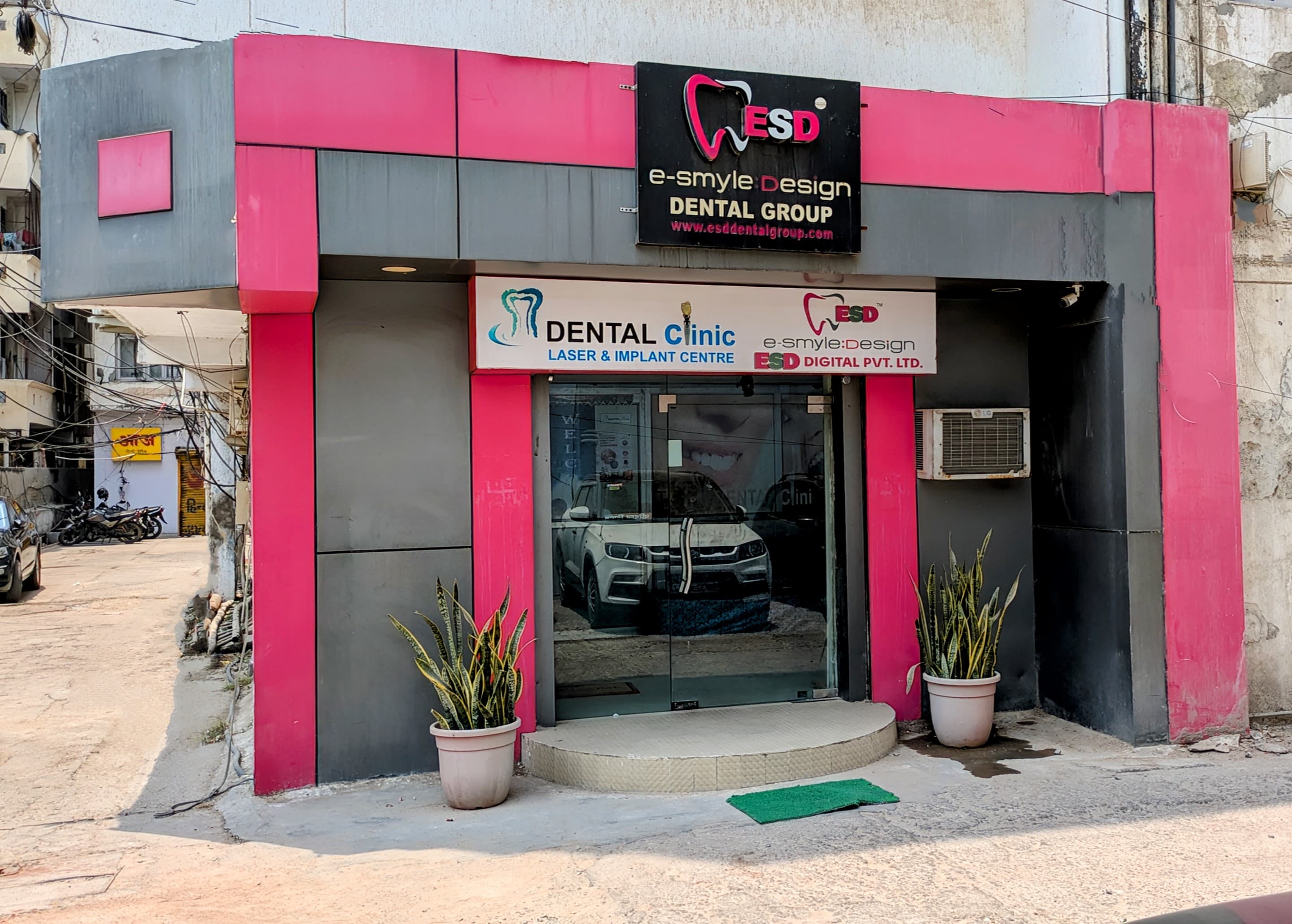
ESD Dental Clinic, Ground Floor, B Block, Surajdeep Complex, 1-Jopling Road, near Aaj Press, Hazratganj, Lucknow – 226001.
This page is general information and does not replace a dental examination.
Tell us what you need and our care team will call you back to confirm a time. We never share your details.
An examination, a written treatment plan and the prices that go with it — before you decide anything.