Teeth Retainers: What Are They and Why Are They Needed After Braces?
Learn what a teeth retainer does after braces, the main types, how long to wear one, how to clean it, what happens if you stop, and when to replace it.
On this page(22)
- What Is a Teeth Retainer?
- Why Is a Retainer Necessary After Braces?
- Can Teeth Move After Braces?
- Types of Retainers After Braces
- Which Retainer Is Best After Braces?
- How Is a Teeth Retainer Made and Fitted?
- How Long Do You Need to Wear a Retainer After Braces?
- Do You Have to Wear a Retainer Forever?
- What Happens If You Don't Wear Your Retainer?
- What If Your Retainer No Longer Fits?
- Does a Retainer Straighten Teeth Again?
- Do You Need a Retainer After Clear Aligners?
- How to Clean Your Teeth Retainer
- How Should You Store a Removable Retainer?
- How Long Does a Teeth Retainer Last?
- What If You Lose or Break Your Retainer?
- Can You Eat or Drink While Wearing a Retainer?
- Can You Sleep With a Retainer?
- How Much Does a Teeth Retainer Cost in India?
- Teeth Retainer Care at ESD Dental Clinic
- Medical & Source References
- FAQ Section
If you've just had your braces removed, or you're getting close to that stage, your dentist has probably mentioned one more step: wearing a teeth retainer. It's a small, custom-made appliance, but it plays a big role in how well your teeth stay in their corrected positions over time. This guide covers what a retainer is, why it's needed, the main types, how it's made and fitted, how long you'll wear one, what happens if you skip it, and how to care for it.
What Is a Teeth Retainer?
A teeth retainer is a custom-made appliance designed to hold your teeth in their current position after orthodontic treatment. It's made from an impression or digital scan of your teeth, so it fits your mouth specifically.
It's worth understanding the difference between braces treatment and retainers. Braces (or clear aligners) actively move teeth, applying steady pressure over weeks and months. A retainer works differently — its role is to help maintain that corrected position once active treatment ends, while the bone, gums, and ligaments settle and stabilize. A retainer isn't simply "a lighter version of braces": its primary role is maintenance, not a substitute for braces or aligners when significant movement is needed.
Why Is a Retainer Necessary After Braces?
This is one of the most common post-braces questions: is a retainer really necessary, or optional?
According to the American Association of Orthodontists, the bone and ligament tissue supporting your teeth continues adapting for some time after braces are removed. Teeth can shift during this period if nothing holds them in place — a process often called relapse. Retention is considered a standard part of post-orthodontic care.
It's worth being precise: teeth can shift without a retainer, but they don't automatically become crooked again for everyone. The degree of movement varies by person, by original tooth position, and by how consistently a retainer is worn — which is why retention is standard practice rather than left to chance.
Can Teeth Move After Braces?
Yes — this is well-recognized in orthodontic biology. Teeth sit in a socket surrounded by ligament fibers and bone, and these tissues take time to stabilize after teeth have been moved. Relapse risk is generally considered highest in the months right after brace removal, which is why many retention schedules start with more frequent wear early on.
Movement isn't limited to those first few months, either. Teeth can continue shifting gradually over the years — general aging, jaw growth in younger patients, or simply the everyday forces of chewing and speaking. This is part of why many retention plans include some long-term wear rather than stopping abruptly. The exact risk and pattern varies by person, which is why following your own clinician's schedule matters more than any general rule.
Types of Retainers After Braces
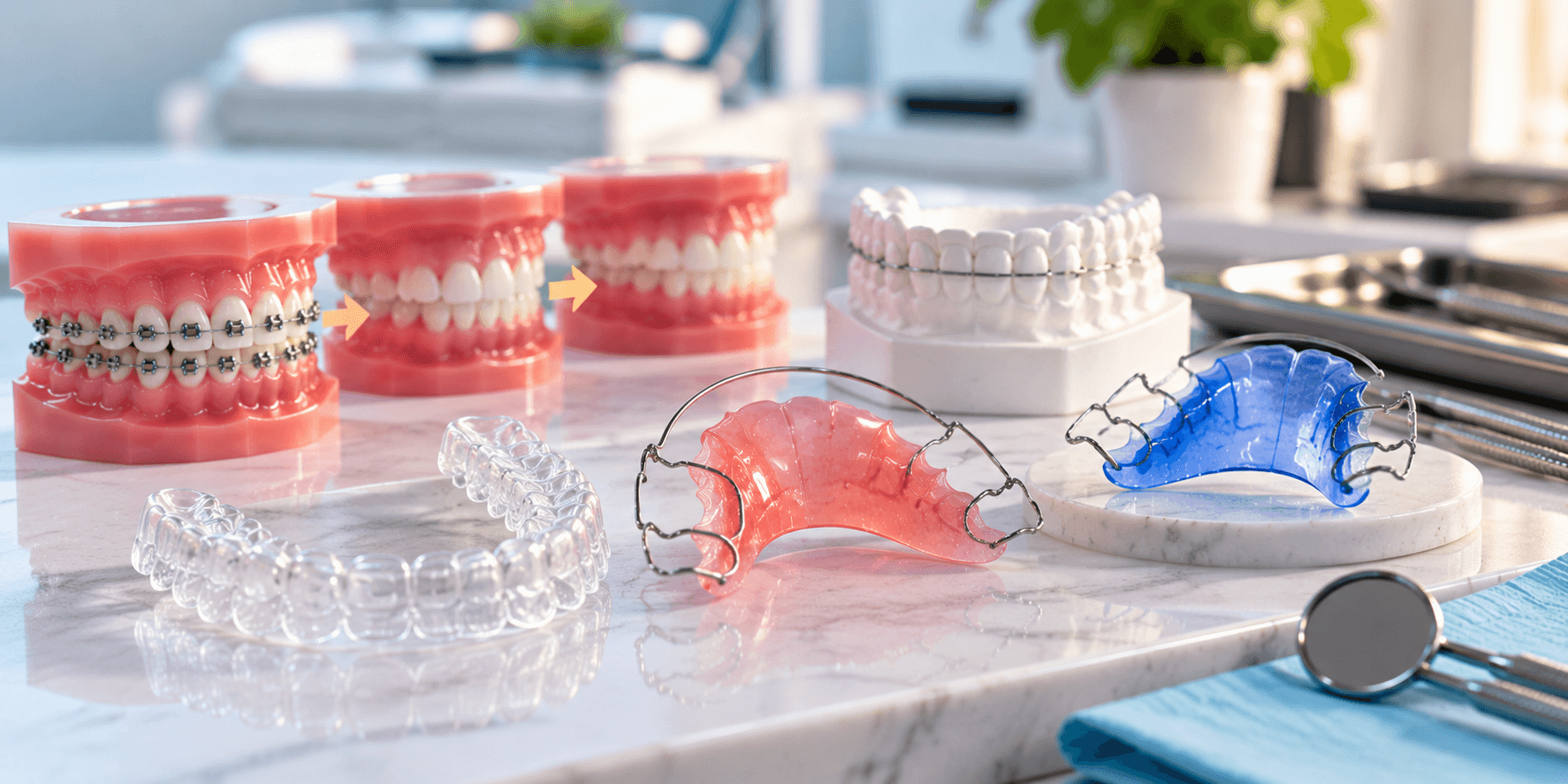
There are three main categories of retainer, each with a different design, wear pattern, and maintenance routine.
Hawley Retainer
A Hawley retainer is a removable appliance combining an acrylic or plastic base — shaped to sit against the roof of the mouth or inside the lower arch — with a thin metal wire across the front of the teeth. It's one of the longest-established retainer designs in orthodontics.
The visible wire makes it more noticeable than a clear retainer, though some patients prefer its durability, and the acrylic base can sometimes be adjusted rather than replaced. It's removed to eat and cleaned separately. Some patients notice a temporary slight lisp for the first few days, which settles as the tongue adapts. Its practical lifespan depends heavily on handling, cleaning, and storage rather than a fixed timeframe.
Clear Retainer
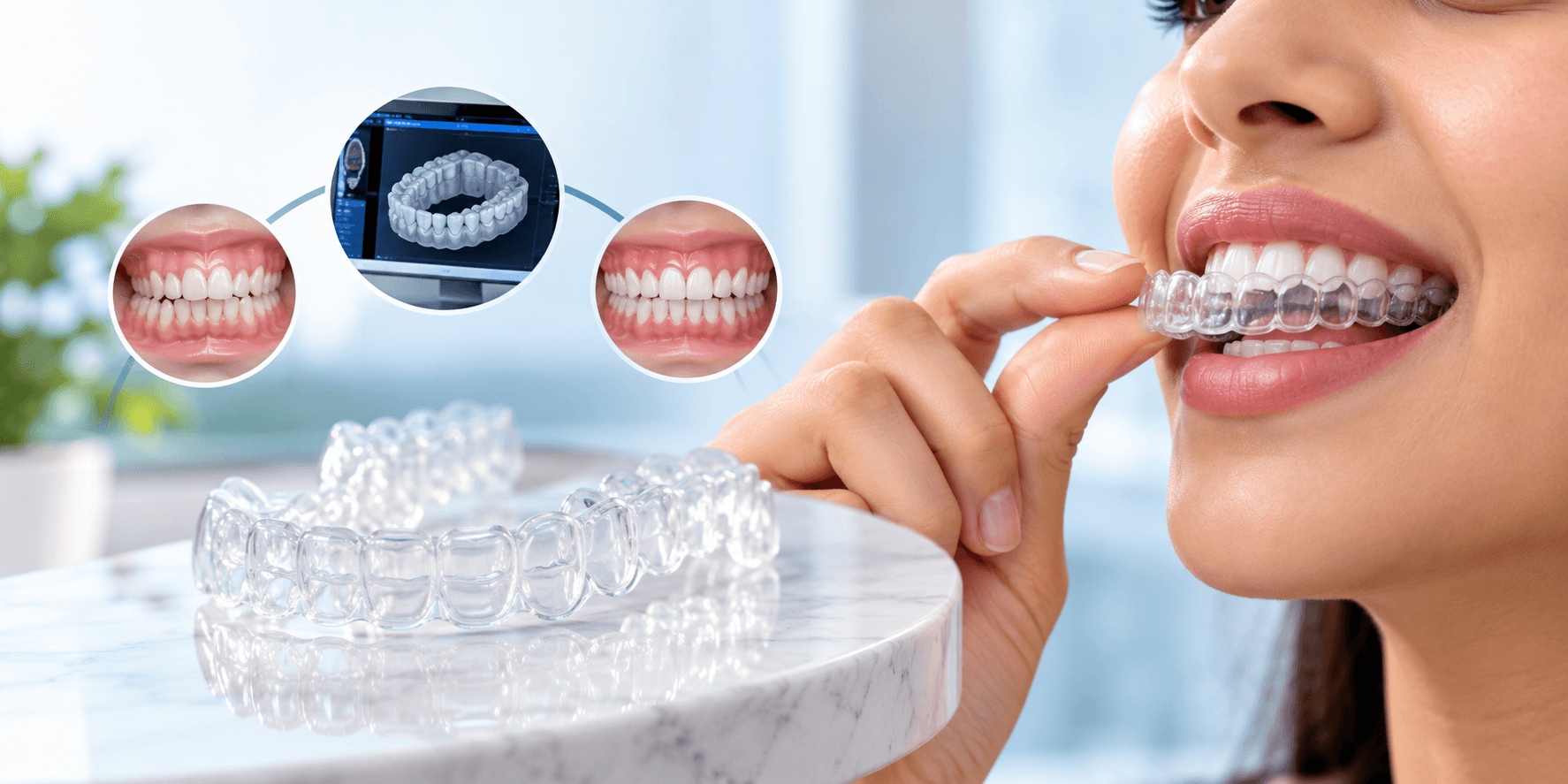
A clear (sometimes "Essix-style") retainer is a thin, transparent plastic tray that fits snugly over the whole arch, similar in appearance to a clear aligner. It's removable and far less visible than a Hawley, which is why many adults prefer it.
Clear retainers are generally easy to keep clean and don't interfere much with eating once removed. One consideration is heat sensitivity — thin plastic can warp if left in a hot car or near a dishwasher, so careful storage matters. Repeated removal and insertion can lead to a less precise fit over time, and clear retainers are generally understood to need replacement more often than fixed retainers, though there's no single universal timeframe.
Fixed / Bonded / Permanent Retainer
A fixed retainer — also called bonded or "permanent" — is a thin wire bonded directly to the back of the front teeth, usually the lower arch, sometimes both. Unlike removable retainers, it isn't taken out by the patient; it provides continuous retention without relying on the patient remembering to wear it.
It's worth understanding what "permanent" means here: the wire is bonded and not meant to be removed by the patient — not that it's indestructible or guaranteed to last forever without maintenance. It can loosen, partially detach, or break, particularly under stress from hard or sticky foods, and needs professional attention rather than being ignored. Because the wire sits behind the teeth, cleaning needs more care — typically a floss threader or interdental brush — and a dentist usually checks it's still fully bonded at routine visits.
Which Retainer Is Best After Braces?
There's no single retainer type that's universally "best" — the right choice depends on your case, orthodontic history, and daily habits. Rather than naming a winner, here are the practical trade-offs:
| Retainer Type | Removable? | Visibility | Cleaning | Compliance Needed | Main Consideration |
|---|---|---|---|---|---|
| Hawley | Yes | More visible (metal wire) | Simple — soft brush + mild soap | High — depends on consistent wear | Durable, but relies on remembering to wear it |
| Clear | Yes | Less visible, discreet | Simple — soft brush + mild soap; avoid heat | High — same compliance demands | Needs careful handling; can warp with heat |
| Fixed / Bonded | No | Hidden behind teeth | More involved — floss threader/interdental brush | Low — no patient compliance required | Continuous retention, but needs thorough cleaning and periodic checks |
In practice, your dentist will usually recommend a type — or a combination, since pairing a fixed lower retainer with a removable upper one is common — based on:
- Your treatment history and how much your teeth moved
- Your risk of unwanted movement
- Your oral hygiene habits
- How likely you are to remember (and not lose) a removable retainer
- Your appearance preferences and your clinician's own protocol
This is meant to help you understand the decision, not make it for you — that conversation belongs with the dentist who treated you.
How Is a Teeth Retainer Made and Fitted?
For a removable retainer, your dentist starts with a dental impression or digital scan — a putty-like mold or a handheld scanning wand. That mold or scan goes to a dental lab, which custom-fabricates the retainer to match your bite, as described by Cleveland Clinic. Your dentist then checks the fit and shows you how to insert, remove, and care for it.
For a fixed/bonded retainer, the process happens chairside: your dentist shapes a thin wire to sit behind your teeth and bonds it in place with dental adhesive — no lab step needed. A new retainer can cause mild pressure or soreness while your mouth adjusts; see "Does Wearing a Retainer Hurt?" in the FAQ.
How Long Do You Need to Wear a Retainer After Braces?
This is one of the most variable parts of retention, and sources describe slightly different timeframes — expected, since the right schedule depends on the individual case.
Cleveland Clinic describes an example of full-time wear for roughly four to six months followed by night-time wear, while Colgate describes a broader four-months-to-a-year full-time range before tapering, with fixed retainers often recommended for years. Rather than treating either as a universal rule, the honest takeaway is that no single timetable fits every patient. Your schedule should come from the dentist who treated you, based on your case, retainer type, and how your teeth respond at review visits — that matters more than any generic number online.
Do You Have to Wear a Retainer Forever?
Many patients are surprised to hear they may need to wear a retainer indefinitely — it's worth understanding why long-term retention is so commonly recommended.
Natural tooth movement doesn't fully stop once treatment ends. Small, gradual shifts can continue for years for reasons unrelated to braces — general aging of the bite, ongoing jaw changes in younger patients, and everyday chewing and speaking forces. Because of this, many retention plans include some long-term wear, often reduced to a few nights a week, rather than stopping completely.
Two ideas often get blurred together:
- A fixed/permanent retainer is a type of appliance — a bonded wire the patient doesn't remove.
- Wearing a retainer permanently (long-term) is a wear schedule — it can apply to a removable retainer too, worn nightly for years, not just a bonded one.
You can have a removable retainer and still be advised long-term wear, or a fixed retainer that eventually needs replacing. Whether either applies to you, and for how long, is your dentist's call based on your case.
What Happens If You Don't Wear Your Retainer?
Skipping wear — briefly or for longer — can let teeth begin shifting, since the pressure holding them in place is gone. In practice this can mean:
- Gradual, sometimes subtle, tooth movement
- A removable retainer feeling tight or uncomfortable to reinsert
- Bite alignment affected if movement is more significant
- A retainer needing replacement rather than being forced back in
- In some cases, reassessment or further orthodontic treatment being discussed
It's not accurate to say exactly what happens after a specific number of missed days — this depends on the individual. What's consistent across sources is that following your prescribed wear schedule is the most reliable way to protect your results.
What If Your Retainer No Longer Fits?
A removable retainer that suddenly feels tight, painful, or hard to seat usually signals some tooth movement, even if it isn't visible to you, as Cleveland Clinic notes. Don't force it — pushing an ill-fitting retainer can cause discomfort or damage.
Contact your dentist as soon as you notice the change. They can assess how much movement has occurred and whether the retainer can still be used, needs adjustment, or should be replaced. Waiting too long can let the situation become more complicated to correct.
Does a Retainer Straighten Teeth Again?
Not in the way braces or aligners do. A retainer is designed to maintain your current tooth position, not to provide the controlled, progressive movement of active orthodontic treatment.
One minor exception: if you've missed wearing your retainer briefly and teeth have shifted slightly, resuming consistent wear may sometimes nudge them back, per Cleveland Clinic — but this generally only works for small, short-term changes, not significant movement. If your teeth have shifted enough that the retainer no longer fits comfortably, that calls for professional reassessment rather than pushing through the discomfort.
Do You Need a Retainer After Clear Aligners?
Yes — retention matters just as much after clear aligner treatment as after braces. Aligners move teeth into a corrected position, and a retainer helps hold that position while surrounding tissues stabilize.
The specific retainer type and schedule depend on your case and your clinician's protocol, just as with braces — there isn't a separate set of rules simply because aligners were used instead of wires and brackets. Ask your dentist which retainer and schedule they recommend once you finish aligner treatment.
How to Clean Your Teeth Retainer
For a removable retainer, clean it gently and daily: rinse after removal, then use a soft toothbrush and mild soap or a dentist-approved retainer-cleaning product. Regular toothpaste can be abrasive on some retainer materials, so follow the instructions for your specific retainer rather than assuming one method suits every appliance, per Colgate and the AAO. Brush and floss your own teeth before reinserting it, and avoid hot water or any heat source, which can warp the plastic or acrylic.
For a fixed/bonded retainer, cleaning needs more care since the wire sits behind your teeth — a floss threader, interdental brush, or water flosser helps reach underneath it. For both types, avoid harsh or unverified DIY cleaning chemicals; stick to what your dentist recommends.
Retainer Care Checklist
- Clean it as instructed by your dentist
- Use the protective case whenever a removable retainer isn't in your mouth
- Keep it away from heat (hot water, cars, direct sun)
- Don't wrap it casually in a tissue — it's easy to lose this way
- Keep it away from pets
- Don't attempt DIY repairs
- Contact your clinic promptly if it cracks, breaks, or no longer fits
- Attend the follow-up visits your dentist recommends
How Should You Store a Removable Retainer?
A protective case is the single most useful habit — get into the routine of using it every time the retainer comes out, even for a quick meal. Avoid wrapping it in a tissue (a common way retainers get accidentally thrown away), keep it away from direct heat, keep it out of reach of pets, and avoid leaving it loose in a pocket or bag without its case.
How Long Does a Teeth Retainer Last?
There isn't one lifespan for every retainer — durability depends on type, material, how consistently it's worn, how it's cleaned and stored, and whether it's ever been dropped, bent, or exposed to heat.
| Sign | What It May Mean |
|---|---|
| Crack or distortion | Replacement may be needed |
| Bent or broken wire | Professional assessment needed |
| Loose or tight fit | Possible tooth movement |
| Loose or detached bond (fixed retainer) | Needs prompt professional review |
| Persistent discomfort | Worth a dentist check rather than waiting it out |
Rather than working to a fixed number of months or years, have your retainer checked at your regular dental visits and contact your clinic promptly if you notice any of these signs.
What If You Lose or Break Your Retainer?
- Contact your clinic as soon as possible — don't wait for your next scheduled visit
- Don't attempt a DIY repair, even a small one
- Don't keep using a damaged retainer if it's causing discomfort or could injure your mouth
- Be prepared that a replacement may be needed, especially for a lost retainer or structural damage
- Don't delay — the longer you go without retention, the more opportunity there is for movement, per Cleveland Clinic
Can You Eat or Drink While Wearing a Retainer?
Removable retainers (Hawley or clear): Take these out before eating or drinking anything other than plain water, to protect the appliance and avoid trapping food.
Fixed/bonded retainers: These stay in during meals since they aren't removed, though your dentist may advise caution with very hard or sticky foods that could stress the wire.
Instructions can vary by appliance and clinician, so confirm specifics with your dentist.
Can You Sleep With a Retainer?
Removable retainers are commonly worn overnight as part of many retention plans, especially once the initial period of more intensive wear has passed. Fixed retainers remain bonded continuously, so night-time wear isn't really a separate decision. Confirm your exact removable-retainer schedule with the clinician managing your case.
How Much Does a Teeth Retainer Cost in India?
Cost varies by retainer type, material, lab work, whether it's a first retainer or a replacement, and the clinic, city, and complexity of your case.
Indicative published prices (India, both arches — upper and lower combined):
| Retainer Type | Indicative Published Price Range in India (Both Arches) | Notes |
|---|---|---|
| Hawley | ₹3,000 – ₹10,000 | Reflects material and clinic differences |
| Clear / Essix | ₹3,000 – ₹16,000 | Widest published range across sources |
| Fixed / Bonded | ₹5,000 – ₹15,000 | Chairside bonding cost; often priced higher |
Compiled from multiple published third-party listings (see Medical & Source References) and normalized here to an approximate both-arches (upper + lower) basis, current as of September 2026. Some clinics quote per arch or per retainer instead of both arches together, so treat these as a general orientation rather than an exact quote — actual pricing varies by clinic, city, and case.
These figures are not ESD Dental Clinic pricing and not a verified India-wide average — ask your treating clinic for an exact quote. For treatment-stage context, see our page on braces treatment, which also covers cost factors.
Teeth Retainer Care at ESD Dental Clinic
Whether you're finishing braces, dealing with a retainer that no longer fits, or you've lost or damaged one, retention is worth discussing with a dentist rather than working it out alone. At ESD Dental Clinic in Hazratganj, Lucknow, you can call or WhatsApp +91 72669 23333, or book a consultation online — the contact page includes a short form and gives you a written treatment plan with prices before you decide anything.
ESD Dental Clinic Ground Floor, B Block, Surajdeep Complex, 1-Jopling Road, near Aaj Press, Hazratganj, Lucknow – 226001 Phone: +91 72669 23333 | Email: esddentalclinic.hzt@gmail.com
Medical & Source References
- American Association of Orthodontists — Retainers: https://aaoinfo.org/treatments/retainers/
- American Association of Orthodontists — What Are Dental Retainers?: https://aaoinfo.org/whats-trending/what-are-dental-retainers/
- Cleveland Clinic — Teeth Retainer: https://my.clevelandclinic.org/health/treatments/10899-teeth-retainer
- Colgate Oral Health — Retainers After Braces: Types and Maintenance: https://www.colgate.com/en-us/oral-health/early-orthodontics/retainers-after-braces-types-and-maintenance
- Colgate Oral Health — How Long Do You Have to Wear a Retainer?: https://www.colgate.com/content/cp-sites-aem/oral-care/oral-care-center/en_us/home/oral-health/early-orthodontics/how-long-do-you-have-to-wear-a-retainer.html
Indian retainer pricing is drawn from publicly published listings at Teeth.in (teeth.in/cost/retainers/), Dental Xperts Kochi (dentalxpertskochi.com), and Dental Braces Delhi (dentalbracesdelhi.com), current as of September 2026 and subject to change.
FAQ Section
1. What is a teeth retainer? A teeth retainer is a custom-made dental appliance worn after braces or aligner treatment to help hold your teeth in their corrected position. It can be removable (Hawley or clear) or fixed/bonded behind the teeth. Unlike braces, it isn't designed to move teeth — its job is to maintain the position already achieved.
2. Why is a retainer necessary after braces? After braces are removed, the bone and ligament tissue around your teeth is still adapting, and teeth can shift without something holding them in place. Retention is considered a standard part of post-orthodontic care because it helps protect the results achieved during treatment, though the exact risk without one varies by individual.
3. What are the types of retainers after braces? There are three main types: Hawley retainers (removable, acrylic base with a visible metal wire), clear/Essix retainers (removable, transparent plastic trays), and fixed/bonded retainers (a wire permanently bonded behind the teeth, not removed by the patient). Many patients use a combination, such as a fixed lower retainer with a removable upper one.
4. Which retainer is best after braces? There's no single "best" retainer for everyone. The right choice depends on your treatment history, oral hygiene habits, lifestyle, appearance preferences, and your clinician's recommendation. Hawley, clear, and fixed retainers each have different trade-offs in visibility, removability, and maintenance — your dentist can help you weigh these for your case.
5. How long should I wear my retainer after braces? Most retention plans start with more consistent, often near-full-time wear for the first several months, then reduce to night-time-only wear, which can continue for months, years, or indefinitely. Exact schedules vary between sources and, more importantly, between patients — always follow the specific schedule your dentist gives you.
6. Do I have to wear a retainer forever? Many retention plans do include some form of long-term wear, often just a few nights a week, because natural tooth movement can continue gradually over the years. Whether "forever" applies to you, and to what extent, depends on your individual case and should be confirmed with your dentist rather than assumed from a general rule.
7. What is a permanent retainer? A "permanent" retainer usually refers to a fixed/bonded retainer — a thin wire bonded to the back of your teeth that you don't remove yourself. It doesn't mean the wire is indestructible; it can loosen, detach, or break over time and should be checked periodically by your dentist.
8. What happens if I stop wearing my retainer? Teeth may begin to shift gradually, since the appliance was helping hold them in place. A removable retainer may start feeling tight or difficult to reinsert if this happens. The extent of movement varies by person, so it's best to resume wear and check with your dentist rather than assume a specific outcome.
9. Can teeth move after braces? Yes, this is a recognized part of orthodontic biology. The tissues supporting your teeth take time to stabilize after treatment, and natural, gradual movement can continue over the years for reasons beyond orthodontics alone. This is a key reason dentists recommend consistent retainer wear according to your prescribed schedule.
10. What should I do if my retainer no longer fits? Don't force it into place. A retainer that suddenly feels tight or uncomfortable usually means some tooth movement has occurred. Contact your dentist so they can assess whether it needs adjustment, replacement, or further evaluation — delaying this can allow further movement to occur.
11. Does wearing a retainer hurt? A new retainer can cause mild pressure or soreness for the first day or two while your mouth adjusts — this is usually mild and settles on its own. Ongoing pain isn't expected once you're wearing it regularly; the fit should feel snug but comfortable. If discomfort persists, worsens, or doesn't settle within a few days, contact your dentist rather than continuing to push through it.
12. Do adults need retainers after braces? Yes — adults can also need retainers after braces. The type and wear schedule depend on their orthodontic treatment and individual dental needs.
13. How do I clean my teeth retainer? Removable retainers should be rinsed and gently cleaned daily with a soft toothbrush and mild soap or a dentist-approved cleaning product, avoiding heat and harsh chemicals. Fixed retainers need cleaning underneath the wire using a floss threader or interdental brush. Always follow your dentist's specific care instructions.
14. How long does a retainer last? There's no single lifespan for every retainer — it depends on the type, material, how it's worn, cleaned, and stored, and whether it's ever been damaged. Watch for cracks, a bent or broken wire, a changed fit, or ongoing discomfort, and have your retainer checked at your regular dental visits.
15. How much does a teeth retainer cost? Cost depends on the retainer type, material, lab work, and whether it's a first retainer or a replacement. Published Indian listings show Hawley and clear retainers commonly priced from roughly ₹3,000–₹16,000 and fixed retainers from roughly ₹5,000–₹15,000 for both arches — these are general third-party figures, not ESD Dental Clinic pricing, so ask your clinic for an exact quote.
16. Can I sleep with my retainer? Yes, night-time wear is commonly part of retention plans for removable retainers, especially once the initial period of more frequent wear has passed. Fixed retainers stay bonded in place continuously, so there's no separate decision to make. Confirm your exact schedule with your treating dentist.
17. Can I eat with my retainer? Removable retainers (Hawley and clear) are usually taken out before eating or drinking anything other than water, to protect the appliance and avoid trapping food. Fixed/bonded retainers stay in place during meals, though your dentist may advise caution with hard or sticky foods. Confirm specifics for your appliance with your dentist.
18. Can a retainer straighten teeth again? Not in the way braces or aligners do — a retainer's main job is maintaining your current tooth position. In some cases, resuming wear after a short gap may nudge minor, recent shifts back into place, but this doesn't work for significant movement, which needs professional assessment rather than retainer wear alone.
Have a question about this?
Book a consultation and get a straight answer from a dentist — no obligation.