Invisible Aligners Cost: What Affects the Overall Price?
Invisible aligners cost varies from case to case. See what drives the price, which extra costs to check, and how to compare two quotations fairly.

On this page(13)
- How Much Do Invisible Aligners Cost?
- What Is Included in the Cost of Invisible Aligners?
- What Factors Affect Invisible Aligners Cost?
- Hidden Costs: What Can Add to the Final Bill
- Why Two Invisible Aligner Quotations Can Have Different Prices
- Does the Number of Aligners Affect the Cost?
- Are Invisible Aligners More Expensive Than Braces?
- Payment Options and Insurance
- What Should You Check Before Paying for Invisible Aligners?
- Can Invisible Aligners Be Used for Minor Teeth Alignment?
- How Long Does Invisible Aligner Treatment Take?
- Invisible Aligners Consultation at ESD Dental Clinic
- Frequently Asked Questions
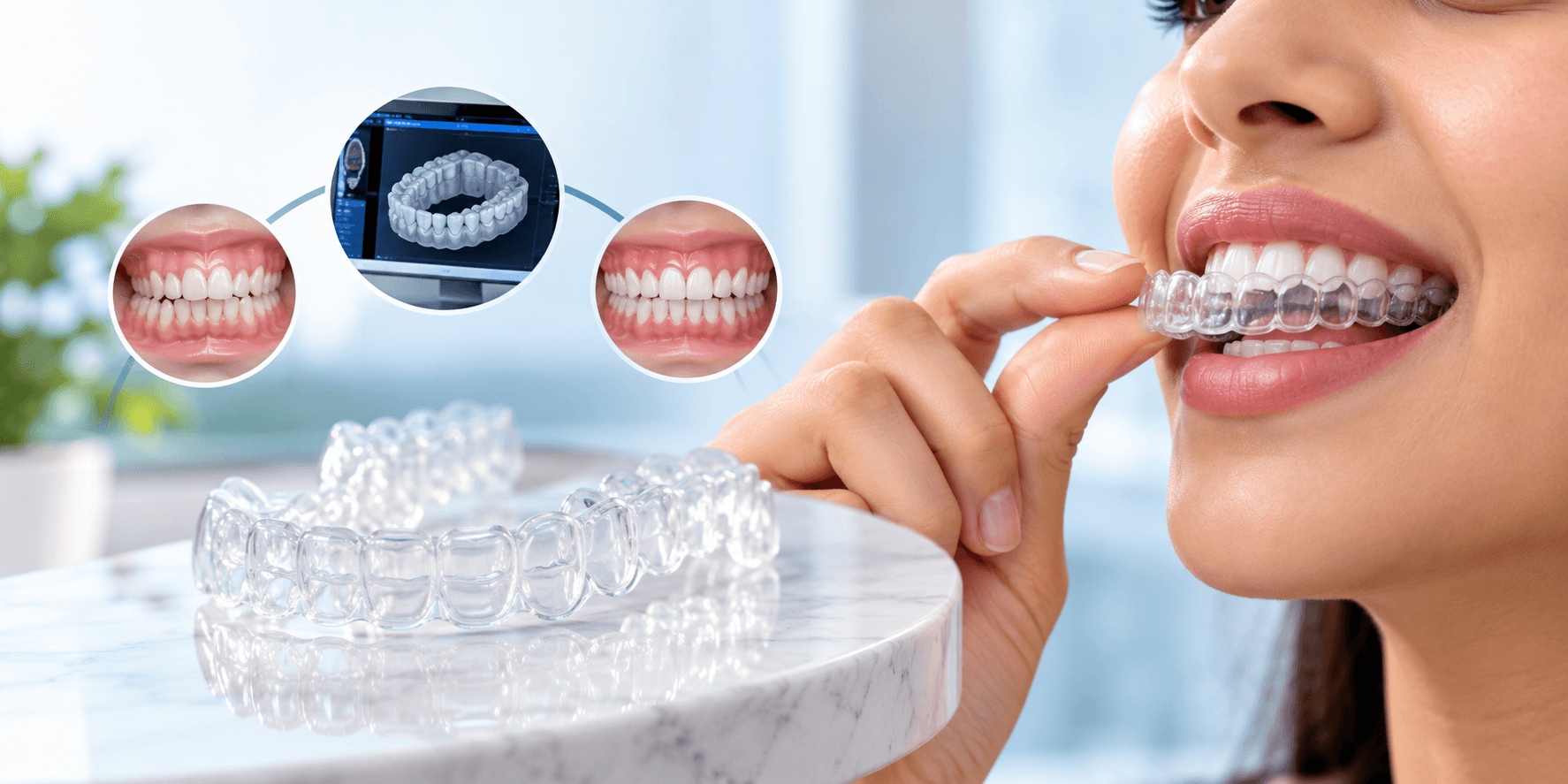
Invisible aligners cost different amounts for different people, and the reason is rarely the plastic trays alone. The final figure reflects the assessment behind the plan, whether one or both arches are treated, how many stages the plan needs, who supervises it, and what happens if the teeth need a little more adjustment at the end. It also depends on what a clinic puts inside one price and what it bills separately.
That is why a headline number tells you very little. A written quotation prepared after a dental examination is the most useful price reference, because it is the one that applies to your teeth. This guide explains what sits behind that figure, including costs people tend to discover late, whether you are comparing options generally or looking for invisible aligners in Lucknow.
How Much Do Invisible Aligners Cost?
Short answer: it depends on your case and on what the quotation covers. Published figures from Indian providers range from the low tens of thousands of rupees to well over two lakh.
That spread is real. Dezy's aligner plans page, viewed in October 2026, listed discounted tiered prices of roughly ₹33,000 to ₹72,000 depending on complexity, with retainers and a set number of refinements built in. Clove Dental's cost guide, published in October 2023, cites about ₹55,000 to ₹2,50,000. These are not ESD prices, they may have changed, and promotional discounts are common. They show only how far apart advertised figures can sit.
They differ because the offers are different products. A "starting from" price usually reflects the simplest case. A package price may bundle several services or cover the trays alone. A personalised quotation reflects your own examination. Comparing a starting price with a full quotation is like comparing a base model with a fully fitted one. If you want the broader picture across India, our guide to teeth aligners cost in India covers it; this article concentrates on what the figure is made of.
What Is Included in the Cost of Invisible Aligners?
Short answer: it varies by clinic. Inclusions are not standardised, so two similar-looking prices can cover quite different things.
The table below is a checklist for asking questions, not a description of any particular clinic's package.
| Component | What it may cover | What to confirm |
|---|---|---|
| Consultation and examination | Review of your teeth, gums and bite; discussion of goals | Is it charged separately, or adjusted against treatment? |
| Diagnostic records | Photographs, digital scans or impressions, and X-rays where clinically needed | Which records are included? |
| Treatment planning | Designing the planned tooth movements and stages | Will you see and discuss the plan before starting? |
| Aligner trays | The planned series of trays | Does the figure cover the whole series, for one or both arches? |
| Attachments | Small tooth-coloured bumps bonded to some teeth, where the plan calls for them | Are they included if your plan needs them? |
| IPR | Polishing a very small amount of enamel between teeth, where planned | Is it part of the fee? |
| Progress reviews | Scheduled check-ups during treatment | Are reviews included, or charged per visit? |
| Refinements | Additional trays if teeth need further adjustment | Included, limited or charged separately? |
| Retainers | Appliances that hold teeth in position after treatment | Is the first set included? What about replacements? |
| Lost or damaged trays | Replacement of a tray that is misplaced or broken | What is the policy and charge? |
| Additional dental care | Treatment for cavities, gum problems or cleaning before aligners | Is this excluded from the quotation? |
What Factors Affect Invisible Aligners Cost?
Short answer: case complexity, one or both arches, planned stages, the aligner system, the clinician's planning and supervision, records, reviews, refinements, retainers and any extra dental care.
These factors work together, and none is a formula on its own.
Complexity of the case
Mildly crowded or slightly spaced teeth usually ask less of a plan than teeth that must travel further, rotate, or sit against a bite that does not meet evenly. Complexity shapes the plan, the treatment time and the supervision needed.
Photographs alone cannot reliably show which category you fall into. Two smiles that look alike in a selfie can differ in root positions, the way the jaws meet or the condition of the gums.
One arch or both arches
Some people want only the upper or lower teeth treated, and some clinics price single-arch treatment separately. It sounds like an easy saving, but the upper and lower arches work together, and moving one alone can change how the bite meets. Whether one arch is sensible is the dentist's decision after examination, and it should be priced as its own plan, not assumed to be half the full figure. Always check which arches a quotation covers.
Number of treatment stages
An aligner plan is divided into stages, each tray guiding the teeth a small step. The planned number of stages can affect a quotation, but fewer stages do not automatically mean a lower price, nor more a higher one. It depends on how the clinic builds its figure.
Aligner system
Systems differ in manufacturing, materials, planning software, laboratory workflow and clinical support, and these differences can show in the price. That does not make one system universally better. Ask whether the chosen system suits your plan, and what support comes with it.
Treatment planning
Planning is clinical work: deciding which teeth move, in what order and by how much. The digital simulation you may be shown is a record of that thinking, not just a production file. If a quotation looks unusually low, ask how much clinician planning it reflects, and whether you can review the plan before the trays are made.
IPR (enamel polishing between teeth)
Interproximal reduction, or IPR, means removing a very small amount of enamel from the sides of some teeth to create room for movement. Some aligner plans use it and others do not. According to the Cleveland Clinic, the amount removed is small, the procedure is not painful because enamel has no nerves, and it cannot be reversed, so only a dental professional should do it.
For cost, the question is whether it is included if your plan needs it. Whether it is needed at all is a clinical decision, not something to request or refuse in advance.
Diagnostic records
Most plans begin with photographs and a scan or impression of the teeth. X-rays are taken where clinically indicated, not for everyone. Some clinics fold records into the treatment fee; others charge for them at the start.
Follow-up and clinical supervision
Teeth do not always respond exactly as predicted. Reviews let the dentist check that trays fit, teeth are tracking the plan, and gums stay healthy. How often they are needed depends on the case, so we offer no figure. For cost, ask whether reviews are in the quotation and who carries them out.
The clinician's experience and involvement
Aligners are manufactured appliances, but planning and managing treatment is a clinical skill. The American Association of Orthodontists, a US body, states that an orthodontist is best qualified to judge whether braces or aligners suit a person. Training, planning time and availability for supervision can all influence what a clinic charges.
That does not mean the highest quotation is the best care, or the lowest the poorest. Ask who will plan your treatment, who will see you at each review, and what happens if the plan changes.
Refinements
A refinement is an additional set of trays made after the first series, used when teeth have not reached the planned positions or small adjustments remain. Some patients need one; some do not. Nobody can say in advance which group you will fall into, so clinics handle this differently: some include refinements, some include a limited number, and some charge separately.
Retainers
Active aligner treatment moves the teeth; retention keeps them there. The American Association of Orthodontists explains that teeth tend to drift back toward their earlier positions after treatment, because the bone around them stays responsive. That is why retainers are a normal part of orthodontic care, not an optional extra.
Some quotations include the first set; others quote retainers separately. Replacements are a separate matter, since retainers can be lost or wear out.
Additional dental treatment
Healthy teeth and gums are the usual starting point for aligner treatment. If an examination finds cavities, gum inflammation or a need for cleaning, your dentist may advise addressing these before or alongside treatment. This applies to some patients, not all, and where it does, the work is typically separate from the aligner fee.
Hidden Costs: What Can Add to the Final Bill
Short answer: the extras that most often surprise people are charges for records, extra visits, refinements, replacement trays or retainers, and dental work found at examination.
Most of these are legitimate costs. The problem is learning about them after treatment has started. Ask whether any of these could be billed on top of the quoted figure:
- Records and consultation, if charged separately.
- Review fees, per visit or for unscheduled visits.
- Refinement trays, if teeth need further adjustment.
- IPR and attachments, where your plan includes them.
- Lost or damaged trays. Ask whether replacements are covered, limited or charged per tray.
- Replacement retainers, if the first set is lost or worn.
- Extra dental care, such as fillings, gum treatment or cleaning.
- Plan changes, if your treatment goal is revised midway.
Why Two Invisible Aligner Quotations Can Have Different Prices
Short answer: because the quotations often cover different things.
Imagine two quotations. Quotation A carries a higher number and covers the examination, scans, planning, the planned stages, review visits, refinements if needed, and the first retainers. Quotation B carries a lower number but charges for records, reviews and retainers separately, and treats any refinement as a new expense.
On paper, B looks cheaper. Add the extras that A had already counted, and the gap can narrow, vanish or reverse. A lower headline price does not necessarily mean a lower overall treatment cost.
The table below is invented to show how inclusions can differ. It contains no figures and does not describe ESD Dental Clinic or any other provider.
| Item | Quotation A (higher headline) | Quotation B (lower headline) |
|---|---|---|
| Examination and records | Included | Charged separately |
| Treatment planning | Included | Included |
| Planned aligner series | Included | Included |
| Progress reviews | Included | Charged per visit |
| Refinements | Included if needed | Charged separately |
| First retainers | Included | Charged separately |
| What you still need to ask | Exclusions, additional dental care | All separate charges |
Does the Number of Aligners Affect the Cost?
Short answer: it can, but it is not the only factor, and tray count alone is not a reliable way to calculate the total.
Multiplying the number of trays by a fixed rate leaves out most of what a patient pays for: planning, supervision, reviews, refinements and retainers. A case with fewer trays may still need careful planning and close monitoring, while one with more may follow a straightforward course. Tray count describes how movement is divided into steps, not how much clinical work sits behind it.
Are Invisible Aligners More Expensive Than Braces?
Short answer: sometimes, but not always. It depends on the case, the clinic and what each quotation includes. Neither option is universally cheaper.
| Comparison | Invisible aligners | Braces |
|---|---|---|
| Appliance | A series of removable clear trays | Brackets and wires fixed to the teeth |
| Visibility | Designed to be discreet | Usually more noticeable |
| Removability | Taken out for meals and cleaning | Fixed until removed by the dentist |
| Patient responsibility | Depends heavily on wearing the trays as advised | Less dependent on daily wear decisions |
| Follow-up | Regular reviews needed | Regular adjustments needed |
| Suitability | Suits many cases but not all | Used across a broad range of cases |
| Cost structure | May bundle trays, reviews and retainers | May be structured differently, with its own inclusions |
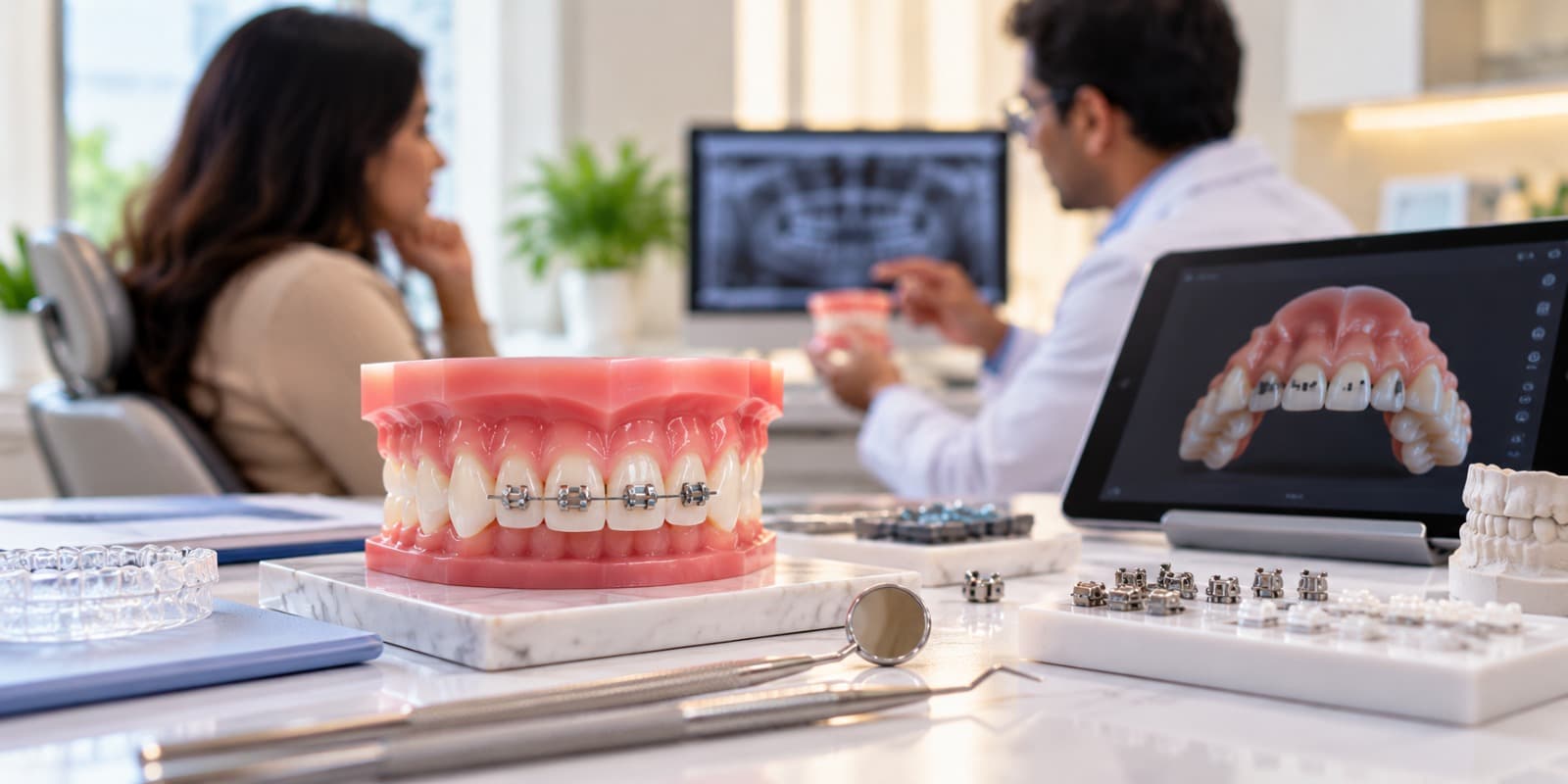
Wear time matters: the American Association of Orthodontists advises wearing aligners about 22 hours a day, removing them only to eat, drink and clean. If you are weighing both options, our page on braces treatment explains how braces fit into orthodontic care.
Payment Options and Insurance
Short answer: payment arrangements differ between clinics, and insurance cover depends entirely on your own policy.
Some clinics and aligner providers offer instalments or EMI, and some split payment into stages. Terms are set by each clinic and any finance partner, so ask what is available, whether interest or a processing fee applies, and what happens if the plan changes. You can ask ESD Dental Clinic about its current payment arrangements when you enquire.
Whether insurance contributes depends on the insurer and the plan. Some policies exclude orthodontic or cosmetic dental treatment; others cover dental care only through specific add-ons or conditions. Read your policy wording or ask your insurer before assuming any part of aligner treatment will be covered.
What Should You Check Before Paying for Invisible Aligners?
Short answer: confirm what is covered, what is excluded and who will supervise treatment, and get the answers recorded.
- Treatment objective. What exactly is the plan aiming to correct?
- Clinical examination. Were your teeth, gums and bite examined before the quotation was prepared?
- Diagnostic records. Which records were taken, and are they included?
- Aligner system. Which system is being used, and why does it suit your plan?
- Planned treatment stages. How is treatment divided, for one arch or both, and can you see the plan?
- Progress reviews. Are review visits included, and who conducts them?
- Refinements. Are they included, limited or charged separately?
- Retainers. Are the first retainers included, and what about replacements?
- Additional charges. What might be billed on top, such as IPR, dental care, lost trays or extra visits?
- Treatment duration. What is the expected timeframe, and what could change it?
- Payment terms. How is payment scheduled, and what happens if the plan changes?
- Clinician supervision. Who oversees treatment from start to finish?
Can Invisible Aligners Be Used for Minor Teeth Alignment?
Short answer: some mild cases may be suitable, but only an examination can tell.
Small gaps or slight crowding are sometimes treated with aligners, but a case that looks minor in the mirror is not always minor in practice. Bite, available jaw space and gum health all matter, and none can be judged from a photograph.
How Long Does Invisible Aligner Treatment Take?
Short answer: it varies with the case, how the teeth respond and how consistently trays are worn.
A refinement, if needed, may add to the timeline. We avoid quoting a universal number of months; your dentist can give an expected timeframe after examining you and planning the movements.
Invisible Aligners Consultation at ESD Dental Clinic
If you are considering invisible aligners in Lucknow and want to understand what treatment may involve for you, a consultation is the practical starting point. The dentist can examine your teeth, discuss whether aligners are suitable, explain the plan and, where appropriate, give you an estimate to review. You can read more about clear aligner treatment on our website.
ESD Dental Clinic is in Hazratganj, Lucknow. To ask about an appointment, call +91 72669 23333 or contact ESD Dental Clinic online. If you already hold a quotation from another clinic, bring it along so the team can help you see what it does and does not cover.
Frequently Asked Questions
What affects invisible aligners cost?
Case complexity, whether one or both arches are treated, the planned stages, the aligner system, the clinician's planning and supervision, records, follow-up, refinements, retainers and any extra dental treatment. A written quotation after examination shows how these apply to you.
How much do invisible aligners cost in India?
There is no single figure. Published prices range widely because scope, system and inclusions differ. For an amount that applies to you, request a written estimate after an examination and check what it covers.
How much do invisible aligners cost in Lucknow?
It depends on the case and on what the quotation includes, so a single city figure would mislead. An examination followed by an itemised estimate is the reliable way to compare local options.
Does the number of aligners affect the price?
It can, but it is not the only factor. Tray count describes how treatment is divided, while cost also reflects planning, supervision, reviews, refinements and retainers.
Are refinements included?
It depends on the clinic. Some include them, some include a limited number and some charge separately. Not every patient needs one, so ask how they are handled before treatment begins.
Are retainers included?
Some quotations include the first set; others list retainers separately. Replacement retainers are often a separate matter, so ask what is covered now and later.
Are invisible aligners more expensive than braces?
Not necessarily. Either can cost more depending on the case and the quotation. A fair comparison needs both quotes to cover the same items, such as reviews and retainers.
Does the package include scans and follow-up visits?
That depends on the clinic. Some packages include records and reviews; others bill them separately. Ask for a line-by-line list.
Is it cheaper to treat only one arch?
Not necessarily, and it is not always suitable, because the upper and lower teeth work together. Your dentist can advise.
Is the advertised price the final cost?
Not always. It may be a starting figure for simpler cases or cover only part of the treatment. Invisible aligners cost what the full plan requires for your teeth, so confirm the final amount after examination.
This article offers general information and is not an individual treatment recommendation. Whether aligners suit you, and what they would cost, depends on a dental assessment.
References
- American Association of Orthodontists (US). Aligners. Supports: professional assessment before treatment and recommended wear time.
- American Association of Orthodontists (US). What Are Dental Retainers? Supports: why teeth drift back after treatment.
- Dezy. Clear Aligners pricing page (viewed October 2026). Third-party figure, not an ESD price.
- Clove Dental. Clear Teeth Aligners Cost in India (published October 2023). Third-party figure, not an ESD price.
- Cleveland Clinic. Interproximal Reduction (IPR). Supports: what IPR involves.
Have a question about this?
Book a consultation and get a straight answer from a dentist — no obligation.