Root Canal Treatment in Lucknow
Root canal treatment to help preserve your natural tooth.
Understanding Root Canal Treatment
Root Canal Treatment (RCT) can treat certain problems affecting the inside of a tooth, and may allow the natural tooth to be kept when that is clinically appropriate. At ESD Dental Clinic in Hazratganj, the first step is always an examination.
Inside every tooth is a soft tissue called the pulp, which contains nerves and blood vessels. When deep decay, a crack or an injury reaches the pulp, it can become inflamed or infected. Root canal treatment removes the affected pulp, cleans the space inside the tooth and seals it, so that the tooth may be kept instead of extracted.
Tooth pain does not always mean a root canal is needed, and some teeth that need one cause no pain at all. That is why an early examination matters: it shows what is wrong and whether a simpler treatment will do.
A tooth has a hard outer layer (enamel), a softer layer beneath it (dentin), and at the centre the pulp, which runs down through narrow channels in the roots called root canals. In root canal treatment the dentist removes the inflamed or infected pulp where appropriate, cleans and shapes the canal spaces, fills and seals them, and then restores the tooth so it can be used for chewing again. The tooth remains in the mouth, held by its roots and surrounding bone, but it no longer has a living pulp inside.
When Might Root Canal Treatment Be Needed?
Root canal treatment may be considered when the pulp of a tooth is inflamed or infected, or when the tooth has been damaged in a way that affects it. This can happen with:
- Deep tooth decay that reaches the pulp
- A crack or fracture in the tooth
- An injury or trauma to the tooth
- Repeated dental work on the same tooth
- Infection that has developed in or around the tooth

What is needed depends on the clinical condition of the individual tooth. Your dentist will examine it before recommending any treatment.
Common Symptoms
These symptoms can occur with problems that may require root canal treatment:
- Toothache that persists or keeps returning
- Pain when biting or chewing
- Sensitivity to hot or cold that lingers after the food or drink is gone
- Swelling of the gum or face near the tooth
- Tenderness in the tooth or surrounding gum
- A tooth that has darkened in colour
- A small, recurring pimple or “boil” on the gum near the tooth
Some teeth that need root canal treatment cause no obvious symptoms and are found only during a check-up or on an X-ray. Symptoms alone cannot confirm that a root canal is needed — a dentist needs to examine the tooth and may recommend diagnostic imaging to find the cause.
Can a Tooth Be Saved With Root Canal Treatment?
Root canal treatment can allow certain affected teeth to be kept, but it does not work for every tooth. Whether a tooth can be saved depends on:
- How much healthy tooth structure remains
- The condition of the gum and bone that support the tooth
- The extent of the damage or infection
- Whether the tooth can be restored afterwards
- Your overall dental health and treatment goals
Your dentist will assess these factors and explain whether root canal treatment is a reasonable option, or whether another approach, including extraction, would serve you better.
The Root Canal Treatment Process
Every tooth is different, so the details vary. In general, treatment follows these steps.
Examination
Your dentist asks about your symptoms and history, and examines the tooth and the tissues around it.
Diagnosis
Tests and imaging, such as an X-ray, may be used to identify the cause of the problem and how far it extends.
Local anaesthesia
Local anaesthesia is generally used to numb the tooth and the area around it, so you are comfortable during treatment.
Access to the tooth
A small opening is made in the tooth to reach the pulp space.
Cleaning and shaping
The affected tissue is removed, and the canals are cleaned and shaped so they can be filled.
Filling and sealing
The cleaned canals are filled and sealed to help prevent further infection.
Final restoration
The tooth needs a lasting restoration — a filling, a crown or another option — depending on how much tooth remains. A temporary filling may be placed until then.
Comfort, Visits and Duration
Does it hurt?
The tooth is generally numbed with local anaesthesia, so most people feel pressure or movement rather than sharp pain. A tooth that is already inflamed or infected can be harder to numb, and experiences vary. Some soreness or sensitivity in the days afterwards is common and usually settles. If you feel anxious, or have had difficult dental experiences before, tell your dentist — they can explain each step and pace the appointment accordingly.
How many visits?
Some root canal treatments can be completed in one appointment; others need more than one. Treatment is commonly completed in one to two visits, but this varies with which tooth is treated, the shape and number of its canals, whether there is infection, and how the tooth responds. The final restoration is often a separate appointment.
Root Canal Treatment vs Tooth Extraction
| Root canal treatment | Tooth extraction |
|---|---|
| Aims to treat the inside of the affected tooth | Removes the affected tooth |
| Can allow the natural tooth to remain | Leaves a gap where the tooth was |
| Usually needs a final restoration | Replacement may be considered later |
| Depends on whether the tooth can be treated and restored reliably | May be recommended when a tooth cannot be suitably restored |
The aim is not to choose root canal treatment over extraction automatically. The right option depends on whether the tooth can be restored, how well its surrounding gum and bone support it, your overall dental condition and what you want from treatment.
Do You Need a Crown After a Root Canal?

Not every tooth is restored in the same way. A tooth that has had root canal treatment has usually lost some of its structure, through decay, damage or the access opening, and may need extra protection.
Whether a crown is recommended depends on how much healthy tooth remains, the forces the tooth takes when you chew, and your dentist’s assessment. Back teeth, which take heavier chewing forces, often need a crown; front teeth sometimes do well with a filling. A crown is often recommended, but it is not automatic for every tooth.
Root Canal Treatment Cost
Search for root canal treatment cost in India and you will see a wide range of figures, because the cost depends on the tooth and the case. Factors that can affect it include:
- Which tooth is being treated, and how many canals it has
- The complexity of the treatment
- Whether there is infection or inflammation
- Imaging and diagnostic tests
- The number of treatment stages
- The restoration needed afterwards, such as a filling or crown
It is worth asking whether an estimate for root canal treatment includes the final restoration — a quote for the root canal itself may not cover a crown unless it says so. We do not publish a fixed price. After examining the tooth, we explain what is needed and give you a written estimate.
After Root Canal Treatment
- The tooth and surrounding area may feel tender or sensitive for a period. This is common and usually improves.
- Take care with eating on the treated tooth and follow any guidance you are given, particularly until the final restoration is in place.
- Return for the final restoration — leaving the tooth with only a temporary filling can put it at risk.
- Brush and clean between your teeth as usual, taking care around the treated tooth.
- Attend follow-up visits if your dentist recommends them.

Your dentist will advise on any medication that is right for you. We do not give medication advice on this page.
When to Contact the Dentist After Treatment
Get in touch with the clinic if you notice:
- Pain that is getting worse or is severe
- Significant swelling of the gum or face
- A temporary filling or restoration that becomes loose, comes out or breaks
- Symptoms that are not improving as you were told to expect
- Anything else that concerns you
A short call is often enough to find out whether you need to be seen.
Root Canal Treatment at ESD Dental Clinic
ESD Dental Clinic has been serving patients on Jopling Road in Hazratganj since 2011. The clinic provides root canal treatment alongside other dental services. If additional treatment is required, your dentist can explain the appropriate options.
Treatment begins with an examination and, where needed, imaging. Before you decide, you are told what is found, what the options are, and what each would involve. If root canal treatment is recommended, you see the plan and cost in writing. Treatment is provided by the appropriate member of the ESD dental team, based on the condition and complexity of the case.
Root Canal Treatment FAQs
It is a treatment for the inside of a tooth whose pulp is inflamed or infected. The affected pulp is removed, the canals are cleaned and sealed, and the tooth is then restored, so it may be kept rather than extracted.
Book a Consultation
Not sure what is causing your tooth pain? An examination is the way to find out. We will look at the tooth, explain what we find, go through your options, including whether root canal treatment is needed, and give you a written estimate. If you have severe pain or facial swelling, please call us.
ESD Dental Clinic, Ground Floor, B Block, Surajdeep Complex, 1-Jopling Road, near Aaj Press, Hazratganj, Lucknow – 226001.
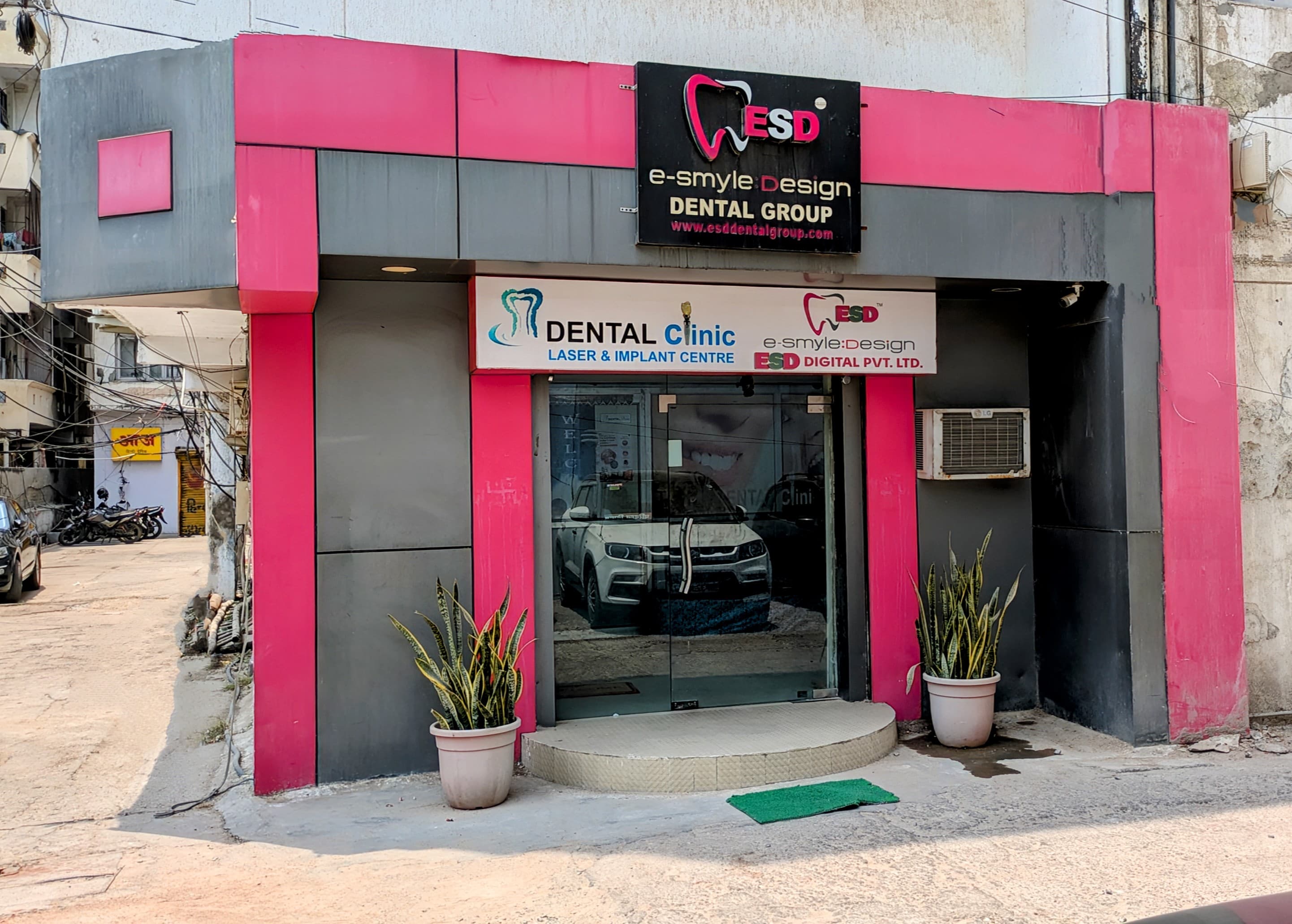
This page is general information and does not replace a dental examination.
Request an Appointment
Tell us what you need and our care team will call you back to confirm a time. We never share your details.
- An examination first — we look before we recommend anything.
- A written, itemised plan with the cost, before you decide.
- Treatment in planned stages, with a review afterwards.
Other Treatments
Ready to book your visit?
An examination, a written treatment plan and the prices that go with it — before you decide anything.