Dental Crowns & Bridges in Lucknow
A dental crown protects and restores a tooth. A dental bridge replaces one or more missing teeth using the teeth next to the gap.
What Are Dental Crowns and Bridges?
Have a weakened tooth or a gap from a missing tooth? At ESD Dental Clinic in Hazratganj, Lucknow, an examination can show which option, if either, suits your case.
A dental crown, sometimes called a cap, covers and protects a tooth that has lost significant structure — for example from a large filling, a crack, or after root canal treatment. It is made to match the shade and shape of your other teeth.
A dental bridge replaces one or more missing teeth. In its usual form, it uses the teeth on either side of the gap as support, with an artificial tooth in between. Both are fixed restorations: unlike a denture, you do not take them out.
Dental Crown vs Dental Bridge
| Dental crown | Dental bridge |
|---|---|
| Restores and covers an existing tooth | Replaces one or more missing teeth |
| Used when enough healthy tooth structure remains to support it | Needs suitable supporting teeth or structures nearby |
| May be considered after root canal treatment | Used for selected missing-tooth situations |
| Suitability depends on an assessment | Suitability depends on an assessment |
When Might You Need One?
A crown may be considered when a tooth is
Weakened or has lost significant structure; damaged or fractured in a way that restoration, rather than extraction, is appropriate; heavily filled and in need of extra protection; or root canal-treated and needing additional support. Not every damaged tooth needs a crown, and not every tooth can be saved with one.
A bridge may be considered when
One or more teeth are missing, the teeth or structures next to the gap are suitable to provide support, and a fixed, non-removable option is preferred. Bridges are not suitable for every missing-tooth situation — your dentist will assess your gums, the supporting teeth and the bone first.
Do You Need a Crown After Root Canal Treatment?

Not every root canal-treated tooth needs a crown. Whether one is recommended depends on how much natural tooth structure remains, where the tooth is in your mouth, how much biting force it needs to withstand, and the findings of a clinical assessment.
Your dentist can assess whether a crown or another restoration is appropriate after your root canal treatment.
Crowns and bridges can be made in different ways, and bridges can be designed differently depending on which teeth support them. The suitable type of crown or bridge is selected based on the patient’s dental condition, treatment requirements and clinical assessment, and your dentist will explain what is proposed for your case and why.
How Crown & Bridge Treatment Works
A general outline of how treatment commonly proceeds. The exact steps, materials and number of visits depend on your case.
Consultation and examination
Your dentist assesses the tooth or teeth involved and discusses your options.
Treatment planning
What is recommended, and why, is explained before treatment starts.
Tooth preparation
Where a crown or bridge support requires it.
Impressions or digital records
Taken where appropriate, to make the restoration.
A temporary restoration
Where applicable, while the final one is made.
Fabrication and try-in
Checking the restoration before it is fitted.
Final placement
With a check of bite and fit.
Follow-up
To review comfort and function.
Time, Comfort and Lifespan
How long does it take?
There is no single timeline that applies to every case. It depends on the number of teeth involved, the condition of the teeth, how much preparation is needed, whether any treatment must happen first, the laboratory process, and the type of restoration.
Does it hurt?
Some patients may experience temporary sensitivity or tenderness during preparation, while the gums settle, or as the bite adjusts to a new restoration. This is usually addressed as part of routine follow-up. If discomfort continues or gets worse, contact your dentist.
How long do they last?
There is no single lifespan that applies to every crown or bridge. It depends on your oral hygiene, bite forces, the condition of the supporting teeth, gum health, the quality of the restoration, habits such as grinding, and how regularly it is reviewed.
How to Care for Crowns and Bridges
- Brush and clean around the restoration as you would your natural teeth.
- Clean between teeth, including under a bridge, using the method your dentist recommends.
- Keep up regular dental reviews so your dentist can check the restoration and your gums.
- Mention any sensitivity that does not settle.

Contact your dentist if a crown or bridge feels loose, cracks or chips, if your bite feels different, or if you notice gum irritation around the restoration that does not settle.
Crowns & Bridges vs Dental Implants
Neither option is universally better. The choice depends on an individual assessment.
| Crown / bridge | Dental implant | |
|---|---|---|
| What is replaced | A crown restores an existing tooth; a bridge replaces missing teeth using neighbouring teeth for support | Replaces a tooth root as well as the visible tooth |
| Support | Bridges rely on the condition of the supporting teeth | Relies on the jawbone; needs a surgical procedure |
| Treatment stages | Generally fewer stages | Usually staged, with healing time |
| Neighbouring teeth | A bridge involves preparing the supporting teeth | Neighbouring teeth are not used for support |
| Maintenance | Regular cleaning and reviews | Regular cleaning and reviews |
| Suitability | Needs suitable supporting teeth or structure | Needs an assessment of bone, gums and general health |
A bridge is fixed in place; a complete denture is removable and used when no natural teeth remain in an arch. Which is appropriate depends on how many teeth are missing and the condition of any remaining teeth.
Dental Crown & Bridge Cost in Lucknow
Cost depends on the number of teeth involved, whether a crown or a bridge is needed, the material used, the complexity of the case, the condition of the supporting teeth, any treatment required beforehand, laboratory requirements, and the number of appointments. What to ask before treatment:
- What restoration is recommended, and why?
- What material is proposed?
- What is included in the cost?
- Are temporary restorations included?
- Are follow-up adjustments included?
- Are any additional treatments charged separately?
Crown & Bridge Treatment at ESD Dental Clinic
Crown and bridge is one of the treatments offered by ESD Dental Clinic, a multi-specialty dental clinic in Hazratganj, Lucknow, established in 2011. An assessment is needed to understand whether a crown, a bridge, or another treatment is appropriate for your case. Your dentist can explain the available options and provide a treatment plan.
Each dentist’s qualifications and registration number are shown on their profile. When you book, you can ask which dentist will assess you.
Crowns & Bridges FAQs
A dental crown, sometimes called a cap, is a restoration that covers and protects a tooth that has lost significant structure. It is shaped and shaded to match your other teeth.
Book a Crown & Bridge Consultation
If a tooth is weakened or you have a gap from a missing tooth, an assessment is a sensible next step.
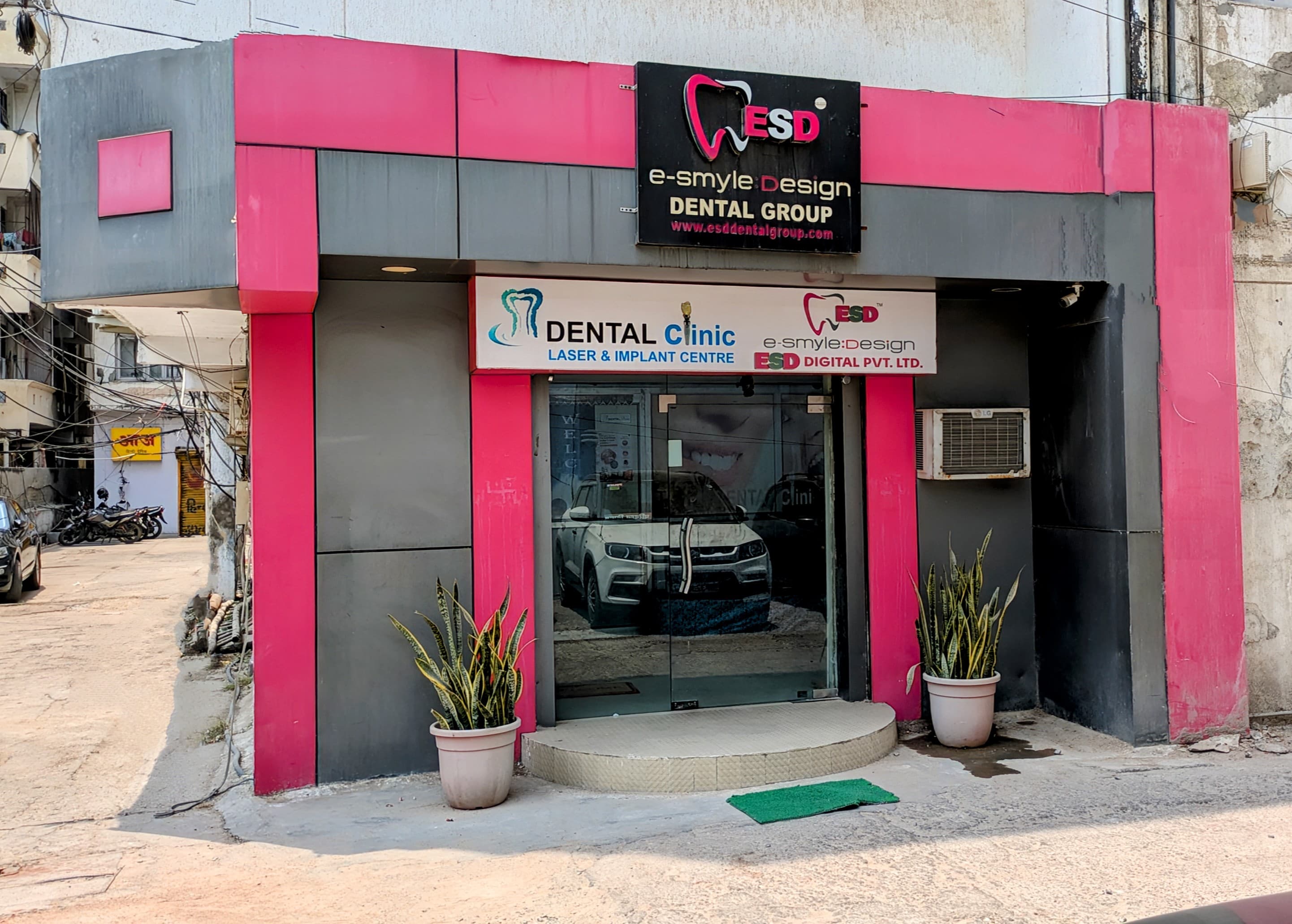
ESD Dental Clinic, Ground Floor, B Block, Surajdeep Complex, 1-Jopling Road, near Aaj Press, Hazratganj, Lucknow – 226001. Phone +91 72669 23333.
This page gives general information. It is not a diagnosis and does not replace an examination by a dentist.
Request an Appointment
Tell us what you need and our care team will call you back to confirm a time. We never share your details.
- An examination first — we look before we recommend anything.
- A written, itemised plan with the cost, before you decide.
- Treatment in planned stages, with a review afterwards.
Other Treatments
Ready to book your visit?
An examination, a written treatment plan and the prices that go with it — before you decide anything.