Braces Cost in India: What Factors Affect the Price?
Braces cost in India depends on the type of braces, your case, treatment time and what the quote includes. Learn what affects the price and how to compare quotes.
On this page(17)
- Why Do People Need Braces?
- How Much Do Braces Cost in India?
- What Determines the Cost of Braces in India?
- What Is Usually Included in the Cost of Braces?
- Why Can Two Dental Clinics Give Different Braces Quotes?
- What About 3-Month or 6-Month Braces?
- Do Braces for the Front Four Teeth Cost Less?
- Braces for Adults vs Children: Does Age Affect the Cost?
- Braces or Clear Aligners: Which Costs More?
- Are Metal Braces the Cheapest Option?
- Should You Choose the Cheapest Braces Option?
- How to Compare Braces Prices From Different Clinics
- Questions to Ask Before Starting Braces
- Frequently Asked Questions
- Further Reading
- Getting a Braces Cost Estimate at ESD Dental Clinic
- Conclusion
The cost of braces in India isn't just the price of brackets and wires. When a clinic gives you a quote, it's pricing a whole treatment: the assessment, the plan, the appliance, months of adjustment visits and, often, the retainer that keeps your teeth in place afterwards. That's why braces cost in India can vary so much from one clinic to the next, and even between two patients at the same clinic.
This guide explains what actually drives the price — whether you'd describe it as braces cost in India, teeth braces price, or braces cost more generally. We cover how the type of braces, the complexity of your tooth alignment, treatment duration, diagnostic records, extra dental work and retainers each affect the final amount. We also look at the questions people search for most, like 6-month braces, braces for only the front teeth, and whether the cheapest option is worth it. By the end, you should be able to read a braces quotation and know what to ask before agreeing to it.
Why Do People Need Braces?
Braces move teeth into better positions to correct crowding, spacing, rotated teeth, or a bite where the upper and lower teeth don't meet evenly. Beyond appearance, a correctly aligned bite can be easier to clean and put less uneven strain on individual teeth. Not everyone with less-than-straight teeth needs treatment; whether braces are appropriate, and which type, is something your dentist determines after examining your teeth and bite. This guide focuses on what shapes the cost of that treatment, not on diagnosing your own case.
How Much Do Braces Cost in India?
There's no single price for braces in India. The cost depends on the type of appliance, how much your teeth need to move, how long treatment is expected to take, the clinic, and what the quote includes. Only an individual assessment can give you an accurate figure for your own treatment.
To give you a sense of scale rather than a number to rely on, here's what other Indian dental providers have published as their own starting prices or estimated ranges:
| Type of braces | Indicative range published online |
|---|---|
| Metal braces | ₹25,000 – ₹70,000 |
| Ceramic braces | ₹30,000 – ₹1,00,000 |
| Self-ligating braces | ₹39,900 – ₹1,08,900 |
| Lingual braces | ₹72,000 – ₹2,50,000 |
| Clear aligners | ₹40,000 – ₹3,00,000 |
| Retainers (post-treatment) | ₹5,000 – ₹20,000 |
Source and method: figures re-verified on 24 September 2026 against four Indian dental-provider websites — FMS Dental, SmyleXL, Clove Dental and OM Dental — as published on their own sites at that time. For each brace type, the low end is the lowest published figure across those four sources and the high end is the highest; self-ligating braces are the one row drawn mainly from a single source (Clove's published range), since the other providers listed only a starting price for that category rather than a full range. This is a snapshot of what's publicly listed, not a scientific market survey, and prices on any given source can change without notice — re-verify before each republish. Providers price the same appliance name very differently depending on the brand, the case and what the quote includes, which is exactly why the ranges are wide. These are not ESD Dental Clinic's prices and not a national average — they're shown only so you have a general sense of scale. Your own cost can only come from an assessment.
You'll find many price ranges online, and they often don't agree with each other, for the same reason the table above spans a wide range. A figure you read on a website may cover the braces alone. Another may cover the full course of treatment, including X-rays and retainers. Comparing those two numbers tells you very little.
A more useful approach is to understand what goes into a quote. Once you know that, a price stops being a mystery and becomes something you can check line by line.
What Determines the Cost of Braces in India?
Nine factors commonly influence the difference between one braces quote and another.
1. Type of Braces
The appliance is the most visible part of the treatment, and different systems cost different amounts to make, fit and manage. General categories include:
- Metal braces — stainless steel brackets bonded to the front of the teeth, joined by an archwire. They're a long-established, widely used fixed option.
- Ceramic braces — similar in design to metal braces but made with tooth-coloured or clear brackets so they're less noticeable. The materials usually cost more.
- Self-ligating braces — brackets with a built-in clip or door that holds the wire, instead of elastic ties. They can be metal or ceramic.
- Lingual braces — fixed braces bonded to the inner (tongue) side of the teeth. They're typically custom-made and technically demanding to place and adjust, which tends to raise the cost.
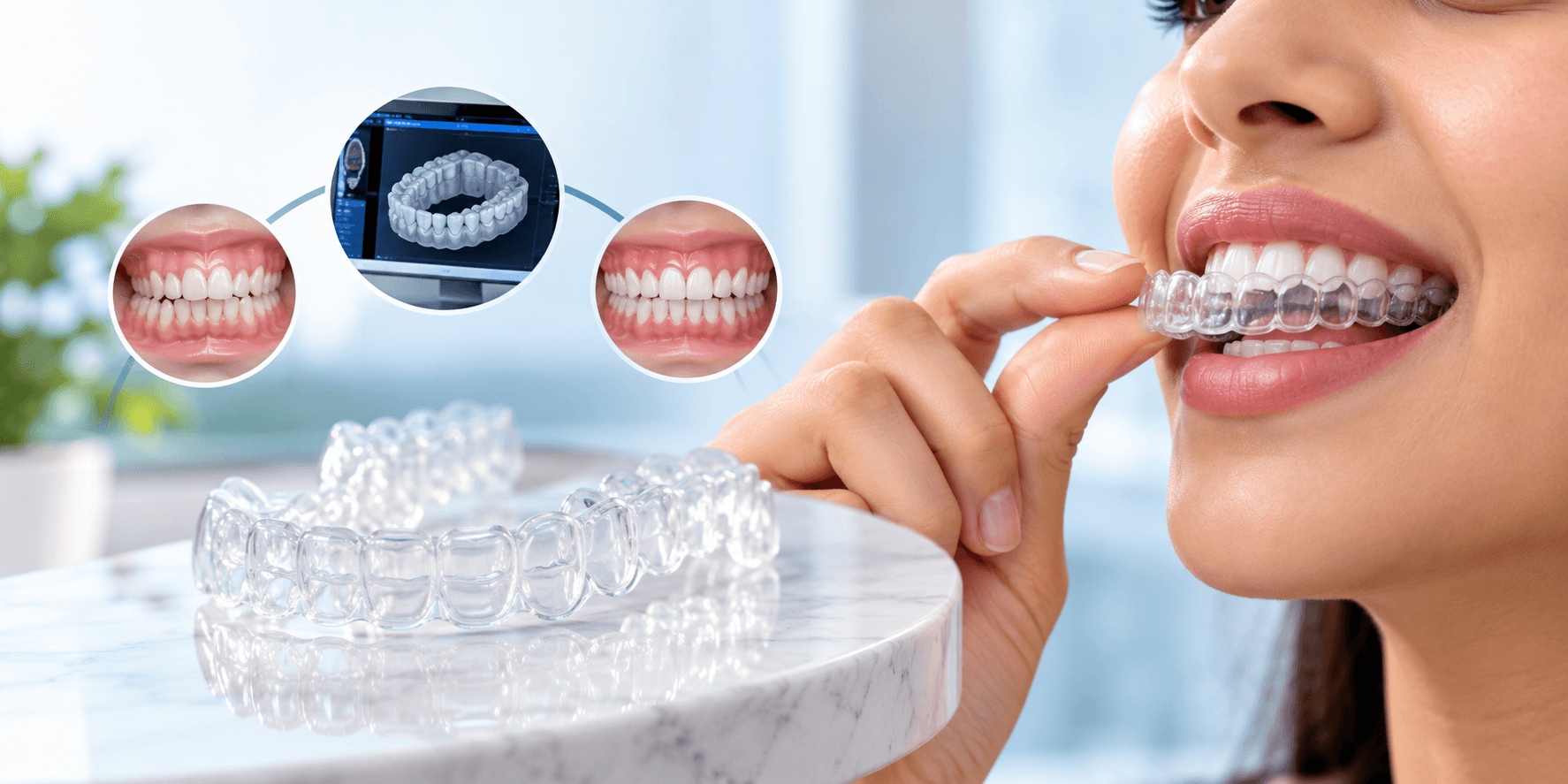
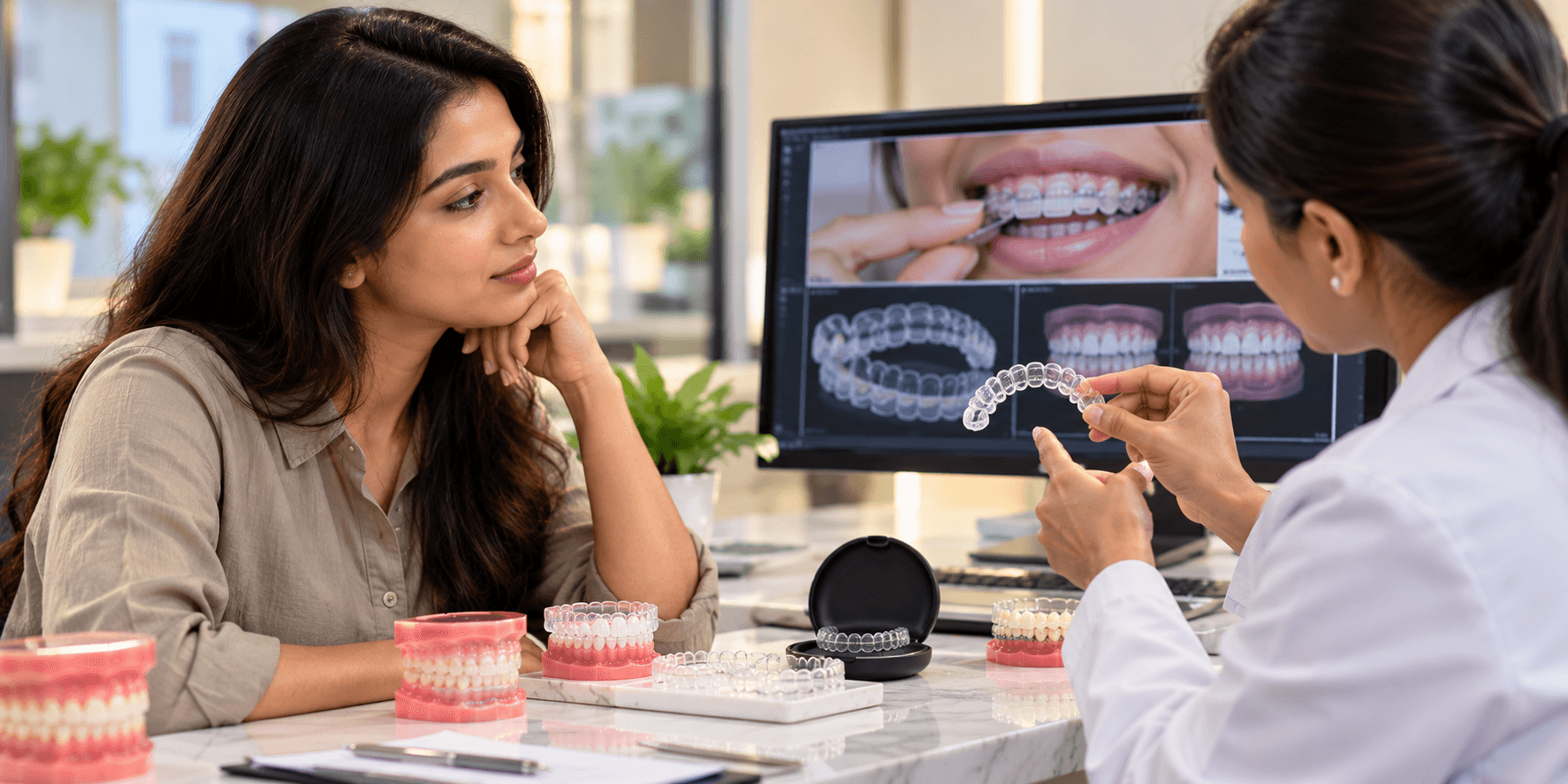
- Clear aligners — a series of removable, transparent trays made for your teeth. The cost reflects the planning and manufacturing of multiple trays, and it varies with the brand and the number of trays your case needs.
The type of appliance your dentist recommends should depend on your teeth and bite first. Appearance, comfort preferences and budget come after that. Not every option suits every case, and not every clinic offers every system.
2. Complexity of Tooth Alignment
Two people can choose the same metal braces and still receive different quotes because their teeth need different amounts of work. Complexity depends on things like:
- how crowded or spaced the teeth are
- how many teeth are rotated or tilted, and by how much
- how the upper and lower teeth meet (the bite), such as an overbite, underbite, crossbite or open bite
- how far the teeth need to move overall
- whether jaw growth or jaw position is a factor
A minor spacing correction is a very different job from a significant bite problem, even if both patients wear braces that look identical. Only a clinical examination can tell you which category your teeth fall into.
3. Expected Treatment Duration
Braces work gradually, so treatment runs for months, and in many cases longer. A longer treatment usually means more appointments, more wire changes and more of the clinician's time, all of which add to the cost of orthodontic treatment.
As a general reference point, patient-education sources such as the American Association of Orthodontists describe typical fixed-braces treatment as often falling somewhere in the range of about one to two years, though many individual cases run shorter or longer than that. There's no standard timeline for any one person. Duration depends on the alignment problem, the bite, how your teeth respond to movement, whether appointments are kept, and how well instructions (such as wearing elastics or aligners) are followed. Your dentist can give an estimate after assessment. Treat any figure, including the one above, as general background rather than a prediction for your own treatment.
4. Orthodontic Assessment and Treatment Planning
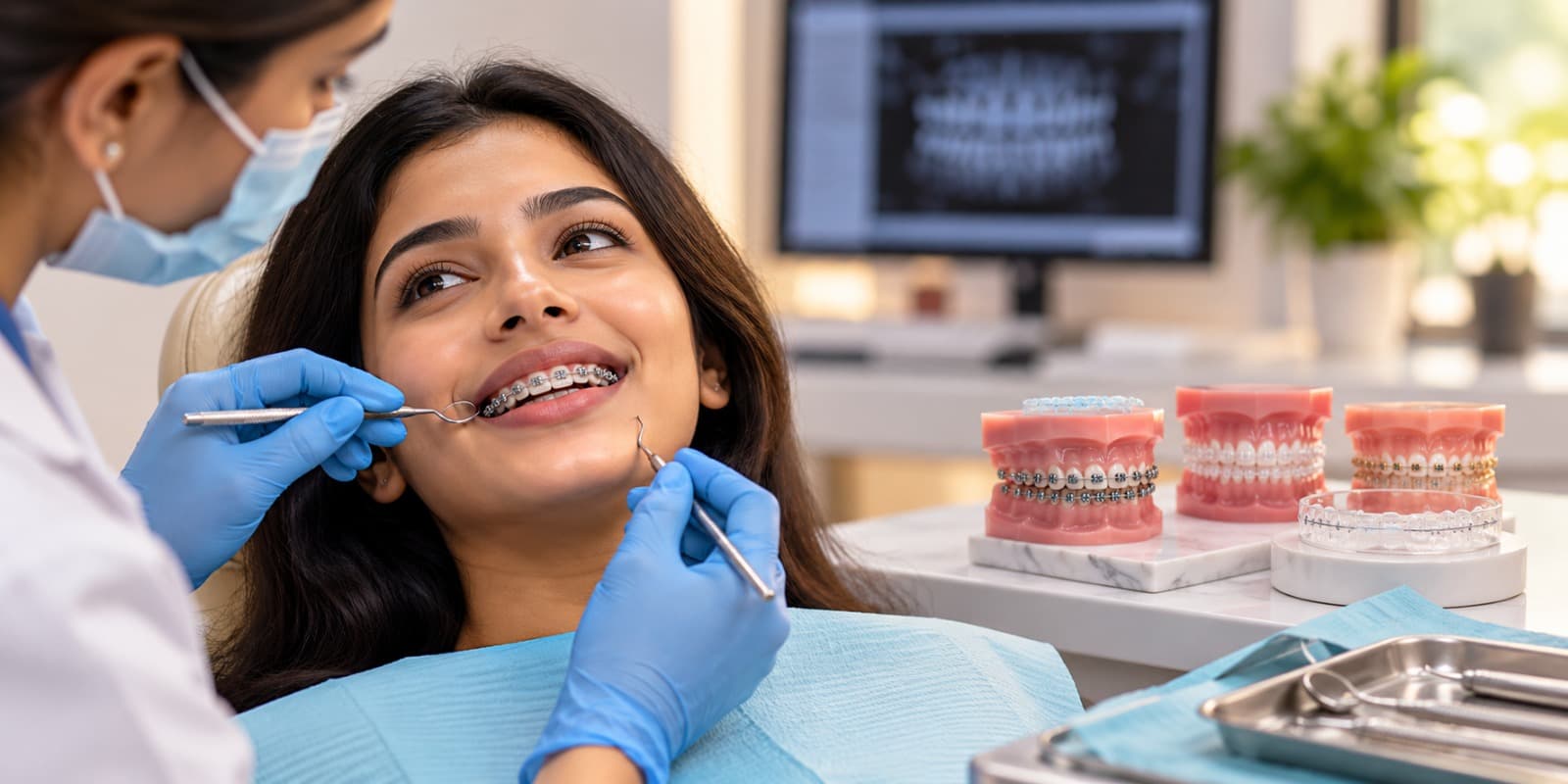
An accurate price normally comes after a proper assessment, not before. During this stage the clinician examines your teeth, gums and bite, discusses your goals and works out how the teeth should move. The plan decides which appliance is used, whether any teeth need extra work first, and roughly how long treatment will take.
This planning is part of what you're paying for. It's also why a price quoted over the phone, without an examination, can change once you're seen in person.
5. Diagnostic Records
Before braces are fitted, the clinic may need records to plan treatment and track progress. Depending on the case, these may include:
- a clinical examination
- photographs of the face and teeth
- X-rays of the teeth and jaws
- impressions or digital scans of the teeth
Not every patient needs every record. Some clinics include diagnostics in the treatment fee, and others charge for them separately. It's worth asking which applies.
6. Additional Dental Procedures
Braces work best on a healthy mouth. Some patients need treatment before braces go on or during the course of treatment, for example:
- filling cavities
- professional cleaning
- treating gum problems
- removing a tooth, when the treatment plan clinically requires it
Many patients need none of these. When they are needed, they're usually separate from the braces fee, so a quote may not show the full cost until your dentist has checked your overall oral health.
7. Clinic Location and Treatment Setup
Braces pricing in India also reflects where and how care is provided. Running costs differ between cities and neighbourhoods, and clinics differ in their staffing, equipment, the clinician's training and experience, and how they organise treatment. These differences can show up in the price.
A higher fee doesn't guarantee better care, and a lower fee doesn't mean poor care. What matters is what the fee covers and who is supervising your treatment.
8. Follow-Up and Adjustment Visits
Getting braces isn't a one-time procedure. After the braces are fitted, you'll return at intervals so the clinician can adjust wires, check progress and deal with any issues, such as a loose bracket. Aligner patients also have review visits to check that the teeth are tracking as planned.
Some clinics include a set number of visits in the quoted amount. Others charge per visit or include visits only up to the estimated end date. If treatment runs longer than planned, this can affect what you pay overall.
9. Retainers After Braces
When braces come off, teeth tend to drift back towards their old positions. Retainers help hold them in their new place. They may be removable or a thin wire fixed behind the teeth, and your dentist will advise how long to wear them.
Retainers are part of the treatment journey, but they aren't always part of the price. Some quotes include the first set of retainers. Others list them separately, and replacements for lost or damaged retainers are usually an extra cost. Check this before you start, not at the end.
What Is Usually Included in the Cost of Braces?
A braces quote can cover anything from the braces alone to the whole journey: consultation, assessment and treatment planning, diagnostic records, the appliance and its fitting, adjustment visits, repairs, removal, retainers and check-ups after treatment. Clinics package these differently, and none of them has to be included. The most useful thing you can do with any quote is find out exactly what it covers.
Before accepting a quote, ask whether the amount includes:
- the consultation and assessment
- X-rays, photographs and scans or impressions
- the specific type of braces or aligners being recommended
- all adjustment visits until treatment is complete
- repairs if a bracket or wire breaks
- removal of the braces
- the first set of retainers
- follow-up visits after the braces come off
- any cleaning, fillings or extractions needed before treatment
If the answer to any item is "no" or "it depends", ask what it would cost.
Why Can Two Dental Clinics Give Different Braces Quotes?
It's common to get two quotes for braces that seem far apart. The difference usually comes down to one or more of these:
- Different treatment plans. One clinic may plan to correct the bite as well as the alignment of the teeth, while another plans a more limited correction. Those aren't the same treatment.
- Different appliance systems. "Ceramic braces" or "aligners" can mean different products with different costs.
- Different assessment of complexity. Clinicians may judge the same case differently, which changes the estimated duration.
- Different professional fees. Training, experience and the clinic's setup affect fees.
- Different number of visits. One quote may cover all visits, while another covers only a fixed number.
- Different diagnostic requirements. One quote may include X-rays and scans; another may list them separately.
- Different inclusions. Retainers, repairs and removal may sit inside one quote and outside another.
- Different post-treatment arrangements. Retention follow-up may or may not be part of the package.
The fair comparison isn't quote A against quote B. It's plan A against plan B, with the same items counted in each.
What About 3-Month or 6-Month Braces?
Short-duration braces are sometimes marketed for limited cosmetic goals, typically aligning the visible front teeth rather than correcting the bite. In selected cases, following clinical assessment, a shorter treatment may be appropriate.
In many cases, however, three or six months is not considered sufficient time to move teeth in a controlled and predictable way. Crowding, rotations and bite problems often require a longer treatment period. Teeth generally need to move at a pace the surrounding bone and gum tissue can tolerate, and this pace is a clinical judgment rather than a fixed timeline that applies to every patient.
This is also why "6-month braces cost" doesn't have a single answer. The appropriate cost depends on what the treatment is designed to achieve and whether that scope matches what the teeth actually need. A clinician can advise, after assessment, whether a shorter treatment would meet a patient's goals or whether a longer, more complete plan is more suitable. That clinical assessment should guide the decision, rather than an advertised timeframe.
Do Braces for the Front Four Teeth Cost Less?
Many people only notice the teeth they can see in the mirror, so treating just the front four teeth sounds simpler and cheaper. Sometimes a limited treatment is suitable. Often it isn't.
The front teeth sit within the whole arch and meet the lower teeth in a particular way. If they're crowded because there isn't enough space in the arch, or because of how the bite fits together, straightening only those four teeth may not deal with the underlying cause. The result may not hold, or it may create a new problem with how the teeth meet.
A limited treatment can cost less when it's clinically appropriate, but that isn't guaranteed. It depends on what the teeth need, not on how many of them you can see. Ask your dentist whether a front-teeth-only approach would give a stable result in your case, and what it would and wouldn't correct.
Braces for Adults vs Children: Does Age Affect the Cost?
Age isn't a pricing category by itself, but it can influence the case in ways that affect cost.
In children and teenagers, orthodontic treatment sometimes takes advantage of ongoing jaw growth, which can broaden the range of options a clinician considers. In adults, the jaw has stopped growing, so treatment works with the bone and teeth as they are; some adults also need a gum and bone health check before treatment starts, since gum health can affect how safely teeth can be moved. Where that extra check is needed, it can add to the overall cost.
Beyond that, the same factors apply whatever your age: how much your teeth need to move, your bite, and how long treatment is expected to take. Braces and clear aligners are both used by adults and by younger patients; suitability is decided by assessment, not by age on its own.
Braces or Clear Aligners: Which Costs More?
It depends on the case, but a few general patterns are worth knowing before you compare quotes.
Clear aligner treatment is typically priced per case, based on the number of trays involved, rather than per appliance, so the published range for aligners is wide — a case needing only a few trays can cost less than an extensive fixed-braces case, while a case needing many trays can cost considerably more than metal or ceramic braces. Fixed braces (metal, ceramic or self-ligating) are usually priced around the appliance, the number of adjustment visits and the treatment duration.
Neither option is consistently cheaper than the other once you compare full treatment plans rather than headline prices. Which one suits your case, and what it would cost, are both questions for your dentist after an assessment of your teeth and bite.
Are Metal Braces the Cheapest Option?
Metal braces are often among the more economical fixed-brace options in India. They're a long-established system, the components are widely available, and many clinicians have extensive experience using them.
That said, metal braces aren't automatically the lowest quote. A metal braces quote for a complex case with a long treatment plan may be higher than an aesthetic option for a simpler case. The final cost still depends on complexity, duration, diagnostics, visits and retainers, as with any other appliance.
Should You Choose the Cheapest Braces Option?
Price matters, and it's reasonable to want treatment that fits your budget. The risk is comparing headline figures that don't include the same things. A low quote that leaves out X-rays, adjustment visits and retainers can end up costing more than a higher quote that includes them.
Before choosing on price, run the lowest quote through the inclusions checklist above. Pay particular attention to three things: what happens (and what it costs) if treatment takes longer, whether follow-up after the braces come off is covered, and whether you'll get a written treatment plan. A quote that can't answer these clearly isn't really comparable yet.
The aim isn't to find the most expensive option or the cheapest. It's to understand what you're paying for.
Braces Cost Factors: What to Check in a Quote
| Factor | Why it can change cost | Ask the clinic |
|---|---|---|
| Type of braces | Material, customisation and handling time differ by system | Which appliance, and why this one for my case? |
| Case complexity | More crowding, rotation or bite correction means more work | How would you describe my case? |
| Treatment duration | Longer treatment means more visits and clinician time | What's the estimated duration, and what could extend it? |
| Diagnostic records | X-rays, photos and scans may be included or extra | Which records do I need, and are they in the quote? |
| Additional dental treatment | Fillings, cleaning, gum care or extractions are usually separate | Do I need any treatment first, and what would it cost? |
| Follow-up visits | Some quotes cover all visits; others cover a fixed number | Are all adjustment visits included to completion? |
| Retainers | May be included, separate, or partly covered | Are retainers included? What's a replacement cost? |
| Clinic/treatment setup | Fees reflect location, staffing, equipment, experience | Who will plan and supervise my treatment? |
Types of Braces: A General Comparison
| Type | General characteristic | Cost consideration |
|---|---|---|
| Metal braces | Fixed stainless steel brackets and wire; long-established | Often among the more economical fixed options |
| Ceramic braces | Fixed tooth-coloured or clear brackets; less noticeable | Materials typically cost more than standard metal |
| Self-ligating braces | Built-in clips instead of elastic ties | Bracket system usually costs more than conventional |
| Lingual braces | Fixed, bonded behind the teeth; usually custom-made | Customisation and technique usually raise the cost |
| Clear aligners | Series of removable transparent trays | Varies with brand, planning and number of trays |
Availability and suitability vary by patient and clinic. These are general categories, not a statement of which systems ESD Dental Clinic offers.
How to Compare Braces Prices From Different Clinics
If you have more than one quote, work through them in this order:
- Check the appliance. Make sure you're comparing the same type of braces, or know why they differ.
- Check that the treatment plans are comparable. Is each plan correcting the same things, including the bite, or is one more limited?
- Check the diagnostics. Which records are included, and which are extra?
- Check the follow-up visits. Are all adjustments covered until the braces come off?
- Ask about retainers. Are they included, what type are they, and what does a replacement cost?
- Ask whether additional procedures are separate. Cleaning, fillings, gum treatment and extractions are often quoted on their own.
- Ask what happens if treatment takes longer than expected. Find out whether extra months or visits cost more.
- Ask for the treatment plan and cost breakdown in writing. A written breakdown makes the comparison clear and avoids surprises later.
Questions to Ask Before Starting Braces
Take these to your consultation:
- Which type of braces are you recommending for me?
- Why is this option suitable for my teeth and bite?
- What does the plan aim to correct, and what won't it correct?
- What is included in the quoted cost?
- Are X-rays, photographs or scans included?
- Are all adjustment appointments included?
- Are retainers included, and what happens if I lose or break one?
- Could I need any dental treatment before braces are fitted?
- What is the estimated treatment duration?
- What could make the treatment take longer, and would that cost more?
- Are there any costs not included in this quotation?
- Can I have the treatment plan and cost breakdown in writing?
Frequently Asked Questions
How much do braces cost in India?
There's no single national price. Braces cost in India depends on the type of appliance, how complex your case is, the expected treatment duration, the clinic and what the quote includes. An individual assessment is the only reliable way to get an accurate figure.
What affects the cost of braces in India?
The main factors are the type of braces, the complexity of tooth and bite correction, treatment duration, diagnostic records, any extra dental treatment needed, the number of follow-up visits, retainers and the clinic's setup.
What is the cost of teeth braces in India?
It depends on the appliance, the complexity of your case, treatment duration and what the clinic's quote includes — the same factors covered throughout this guide. Published ranges give a sense of scale (roughly ₹25,000 for metal braces up to several lakh for lingual braces or extensive aligner cases), but your own figure depends on an assessment of your teeth.
Which type of braces is usually more affordable?
Metal braces are often among the more economical fixed options. Ceramic, self-ligating and lingual braces and clear aligners usually cost more because of their materials, customisation or planning. Your own quote still depends on your case.
Are ceramic braces more expensive than metal braces?
Usually, yes. Ceramic brackets are made from tooth-coloured materials that generally cost more than standard metal brackets. Treatment complexity and duration still affect the total, so compare full quotes rather than bracket type alone.
How much do metal braces cost in India?
Published figures for metal braces generally fall somewhere between ₹25,000 and ₹70,000, though this varies by clinic, city and case. Metal braces are often among the more economical fixed options, but your own quote depends on your treatment plan, not on the appliance type alone.
How much do ceramic braces cost in India?
Published figures for ceramic braces are generally higher than metal, often in the range of ₹30,000 to ₹1,00,000. The brackets themselves cost more to produce, and, as with any appliance, the final price also depends on case complexity and treatment duration.
How much do clear aligners cost in India?
Clear aligner pricing varies widely, roughly ₹40,000 to ₹3,00,000 in published ranges, because it depends on the brand, how many trays your case needs and how much correction is involved. An assessment is needed to know which aligner system, if any, suits your case.
Does age affect the cost of braces?
Age itself doesn't set the price. What can differ with age is the complexity of the case and, for some adults, the need for a gum or bone health check before treatment starts, since these factors influence the treatment plan and, in turn, the cost. Braces are used by both teenagers and adults; suitability and planning are assessed the same way for both.
How much do 6-month braces cost in India?
It depends on what the treatment is meant to achieve. Short treatments are generally suited only to limited goals in selected cases. A clinician needs to assess whether a short treatment is appropriate for you before any meaningful cost can be given.
Can braces be completed in 3 months?
For a small number of very limited corrections, a short treatment may be possible. For many people, three months isn't enough to move teeth safely and predictably. Only a clinical assessment can tell you what's realistic.
Does treating only four front teeth cost less?
Not necessarily. A limited treatment may cost less when it's clinically appropriate, but front-teeth crowding is often linked to space or bite issues that involve more teeth. The cost depends on the treatment your teeth actually need.
Does braces cost include retainers?
It depends on the clinic. Some quotes include the first set of retainers, while others charge separately. Replacement retainers are usually extra. Ask before you start treatment.
Are X-rays included in braces cost?
Sometimes. Some clinics include diagnostic records such as X-rays, photographs and scans in the treatment fee, and others charge for them separately. Not every patient needs every type of record.
Why do two clinics quote different prices for braces?
Clinics may be proposing different treatment plans, appliances, numbers of visits or inclusions, and their professional fees and setup differ. Compare what each quote covers, not just the total.
Does treatment duration affect the total cost?
Often, yes. A longer treatment usually involves more adjustment visits and clinician time. Ask whether your quote is fixed or whether extra months or visits would cost more.
Further Reading
This article focuses on cost. For general, non-India-specific background on how braces and retainers work, these patient-education resources from recognised dental and orthodontic bodies may help:
- How Do Braces Work? — American Association of Orthodontists
- Orthodontics: Treatments — NHS (UK)
- Retainers After Orthodontic Treatment — Nottingham University Hospitals NHS Trust
These sources cover general orthodontic information only; none of them publish or endorse pricing for India, and nothing on this page is drawn from them for cost figures.
Getting a Braces Cost Estimate at ESD Dental Clinic
A general guide like this one can explain what shapes the price of braces, but it can't tell you what your own treatment will cost. That depends on an examination of your teeth and bite, and on the treatment plan that follows.
At ESD Dental Clinic in Hazratganj, Lucknow, an assessment is the starting point. Once your dentist has examined your teeth and discussed your goals, you can talk through the suitable options and what your treatment plan would include. You can learn more about braces treatment at ESD Dental Clinic or book a dental consultation.
ESD Dental Clinic Ground Floor, B Block, Surajdeep Complex, 1-Jopling Road, near Aaj Press, Hazratganj, Lucknow – 226001 Phone: +91 72669 23333 Email: esddentalclinic.hzt@gmail.com
Conclusion
Braces cost in India is shaped by much more than the appliance. The type of braces, the complexity of your case, the treatment duration, diagnostic records, any extra dental work, follow-up visits and retainers all contribute to the final figure. That's why two quotes can look very different and still both be reasonable.
The most useful thing you can do is compare complete treatment plans, not headline prices. Ask what each quote includes, get the breakdown in writing, and make sure the plan addresses what your teeth actually need.
If you're considering braces, an assessment can help you understand which approach suits your teeth and what your treatment may involve.
Have a question about this?
Book a consultation and get a straight answer from a dentist — no obligation.